Author: Steven

  • The 5-Minute Miracle: Why Small Practice Bursts Are the Secret to Musical Success

    The 5-Minute Miracle: Why Small Practice Bursts Are the Secret to Musical Success

    [HERO] The 5-Minute Miracle: Why Small Practice Bursts Are the Secret to Musical Success

    Let’s be honest. You’re busy.

    Between work, family, the weekly shop, and that ever-growing to-do list, finding an hour to sit down with your instrument feels about as realistic as winning the lottery. And when you can’t find that “proper” chunk of time, it’s tempting to think: what’s the point in practising at all?

    Here’s the thing though : that belief is holding you back more than your schedule ever could.

    If you’re a beginner adult (or a student just getting started), this is the secret most people miss: you don’t need a huge chunk of time to make real progress. What you need is a habit.

    What if I told you that just five minutes of focused practise could genuinely transform your musical progress? Not as a consolation prize, but as an actual, science-backed starting point that works brilliantly for busy beginners.

    Sounds too good to be true? Stick with me.

    The Myth of the Marathon Practice Session

    We’ve all been conditioned to believe that “real” practise means sitting down for 45 minutes, an hour, maybe longer. Anything less feels like cheating, right?

    And yes — once you reach more advanced levels, longer sessions do become important. You need time for stamina, detail, and deeper musical work.

    But for beginner adults and students, that expectation can backfire. It creates pressure, guilt, and an all-or-nothing mindset that stops you starting at all.

    The truth is, when you’re building the foundations, consistency beats duration every single time. Your brain doesn’t care whether you practised for five minutes or fifty : what matters is that you showed up, focused on something specific, and gave your neural pathways something to work with.

    Why Five Minutes Actually Works (The Science Bit)

    There’s a fascinating technique called the “5-Minute Miracle” that’s been gaining traction among musicians and educators. The concept is beautifully simple: instead of trying to tackle an entire piece or technique in one session, you focus intensely on a single, specific problem for just five minutes.

    That’s it. Five minutes of laser-focused attention on one thing.

    For beginner adults and students, it’s the perfect starting point because it removes the pressure. You’re not trying to “be a proper musician” in one sitting — you’re just showing up, daily, in a way that’s actually doable.

    Here’s why it’s so effective:

    Your Brain Does the Heavy Lifting Overnight

    When you present your brain with a focused musical problem and then step away, something magical happens. Your subconscious keeps working on it : during your commute, while you’re cooking dinner, and especially while you sleep.

    This is called consolidation, and it’s the reason so many musicians report coming back the next day to find that tricky passage suddenly feels easier. Your brain has been quietly practising without you even realising it.

    You Maintain Peak Mental Focus

    Think about the last time you sat down for a long practise session. How sharp were you by the end? Probably not as sharp as when you started.

    Five-minute sessions keep you at peak mental acuity. There’s no time to warm up with stuff you’ve already mastered or to zone out. You’re forced to address the actual problem immediately, which makes every second count.

    It Removes the Mental Barrier

    Here’s a psychological truth: committing to five minutes feels easy. Committing to an hour feels like a mountain to climb, especially after a long day.

    When the barrier to entry is low, you’re far more likely to actually do it. And once you pick up your instrument, you’ll often find yourself playing longer anyway : but crucially, there’s no pressure to.
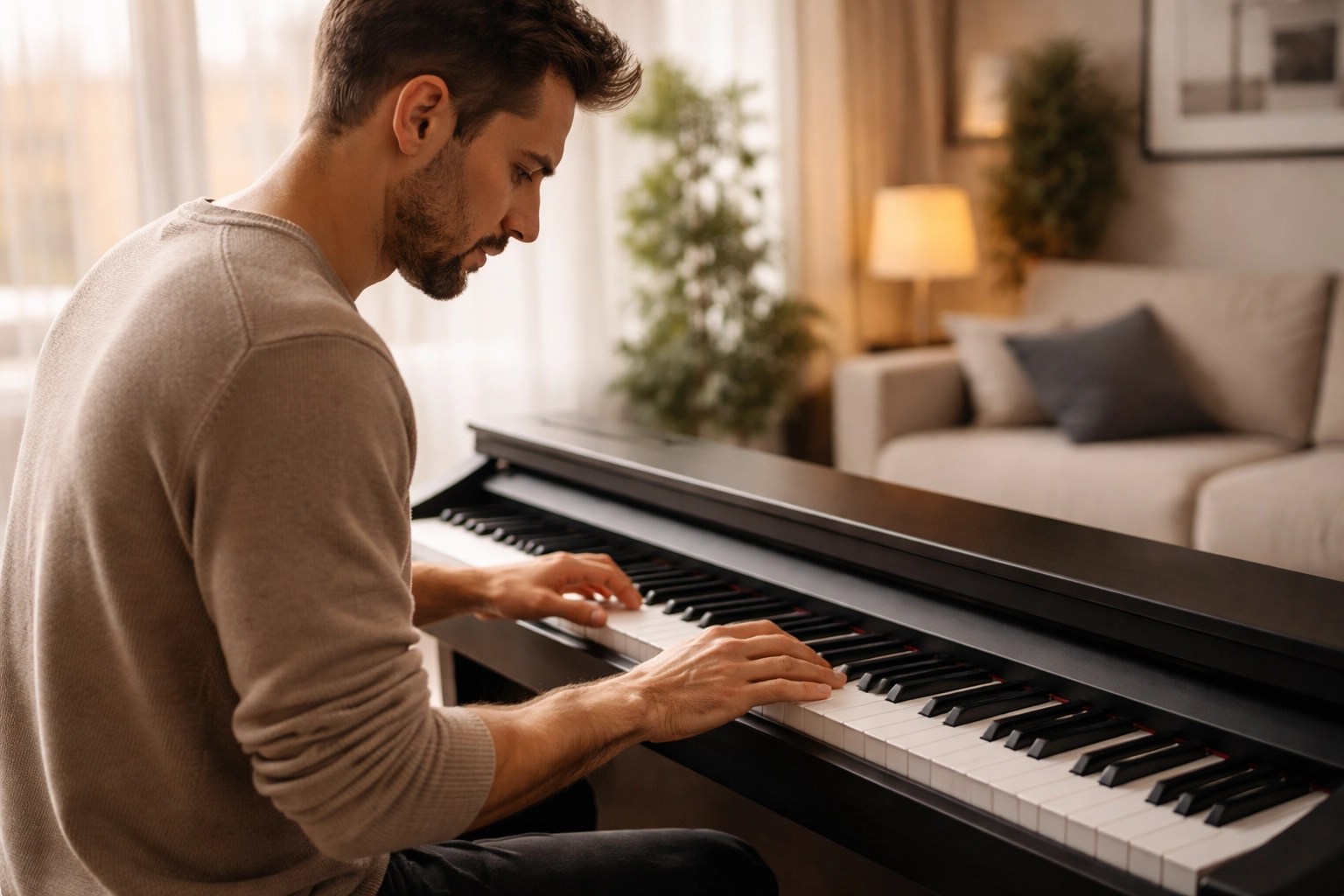
    Male adult student practising piano at home in a high-end modern living room, side profile with face and hands on the keys, with no music stand or sheet music visible.

    How to Make Your Five Minutes Count

    Not all practise is created equal. If you’re only going to spend five minutes, you need to make them count. Here’s how:

    1. Pick One Specific Thing

    This is crucial. Don’t try to “run through” a piece or work on multiple techniques. Choose one problem:

    • A chord change that trips you up
    • A single bar with awkward fingering
    • That rhythm pattern you can never quite nail
    • The transition between two sections

    One thing. That’s your focus for today.

    2. Slow It Right Down

    Speed is the enemy of accuracy when you’re learning. Take whatever you’re working on and slow it down until you can play it perfectly. Then, and only then, gradually increase the tempo.

    Five minutes of slow, accurate practise beats twenty minutes of sloppy fast playing.

    3. Use the “Add One” Method

    This is brilliant for building up complex passages:

    • Day 1: Practise the first bar or phrase for five minutes
    • Day 2: Spend 30 seconds reviewing day one, then add the next bar
    • Day 3: Quick review of both, then add the third bar

    By the end of the week, you’ve built up an entire section without ever feeling overwhelmed.

    4. Actually Stop at Five Minutes

    This might sound counterintuitive, but if you’re using this method strategically, stopping at five minutes is part of the point. You’re giving your brain a focused problem to chew on, then stepping away to let consolidation do its work.

    Of course, if you’re in the flow and want to keep going, that’s fine too. But don’t feel guilty for stopping.

    Finding Five Minutes in Your Day

    Still thinking you can’t find even five minutes? Let’s get creative:

    • While the kettle boils : perfect for a quick scales run or chord practise
    • Before breakfast : set your alarm five minutes earlier (it’s only five minutes!)
    • During your lunch break : keep your instrument accessible if you work from home
    • While dinner’s in the oven : that fifteen-minute timer is generous
    • Before bed : a few minutes of gentle playing can actually help you wind down

    The key is making it easy. Keep your instrument out of its case if possible. Remove any friction between you and those five minutes.

    And here’s the best bit for beginners: once you start noticing progress (and actually enjoying the process), wanting to stay for 10… 15… 20 minutes often happens naturally. Five minutes is the doorway — not the destination.

    The Compound Effect: Where the Magic Really Happens

    Let’s do some quick maths.

    Five minutes a day, seven days a week = 35 minutes of focused practise per week.

    Over a month, that’s nearly two and a half hours.

    Over a year? More than 30 hours of quality, focused practise time.

    And because you’re practising daily rather than cramming it all into one weekly session, your retention is significantly better. Those neural pathways are being reinforced every single day.

    Compare that to the adult who waits for the “perfect” hour-long session that never comes, practises once a fortnight when they finally find time, and wonders why they’re not improving.

    Consistency wins. Every time.

    A Note for the Perfectionist in You

    If you’re reading this and thinking “but five minutes isn’t proper practise” : I get it. As adults, we tend to have an all-or-nothing mindset. If we can’t do something properly, we’d rather not do it at all.

    But music isn’t about perfection. It’s about progress. It’s about the joy of playing, the satisfaction of nailing something that felt impossible last week, the simple pleasure of making sound.

    Five minutes of that joy is worth infinitely more than zero minutes spent waiting for ideal conditions that never arrive.

    Start Today

    Here’s my challenge to you: today, pick up your instrument for just five minutes. Choose one small thing to work on. Set a timer if it helps.

    Then tomorrow, do it again.

    That’s it. No pressure, no guilt, no marathon sessions required.

    You might be surprised where those five-minute miracles take you.

    Now go pick up that instrument. Your five minutes start now.
  • Online Piano Lessons vs In-Person: Which Is Better For Your Learning Style?

    Online Piano Lessons vs In-Person: Which Is Better For Your Learning Style?

    [HERO] Online Piano Lessons vs In-Person: Which Is Better For Your Learning Style?

    So you’ve decided to learn piano: brilliant choice! But now comes the tricky part: should you go for online piano lessons or stick with traditional in-person sessions? It’s a question we get asked all the time here at AberMusic, and honestly, there’s no one-size-fits-all answer.

    The good news? Both options can lead you to becoming the pianist you’ve always dreamed of being. Recent research actually shows that online and in-person piano lessons produce comparable learning outcomes for most students. The real question isn’t which method is better: it’s which method is better for you.

    Let’s break it down together.

    The Rise of Online Piano Lessons

    If you’d told piano teachers twenty years ago that students would be learning Chopin through a laptop screen, they might have laughed. But here we are in 2026, and online piano lessons have become a genuinely fantastic option for learners of all ages and abilities.

    The pandemic certainly accelerated things, but the truth is that music lessons online were already gaining traction before that. Why? Because technology caught up with ambition. High-quality video calls, digital sheet music, and clever practice apps have made learning piano remotely not just possible, but genuinely effective.

    At AberMusic, we’ve been offering online piano lessons worldwide since we were founded in 2023, and we’ve watched students from the UK to Singapore make incredible progress: all without stepping foot in Wales!

    The Timeless Appeal of In-Person Lessons

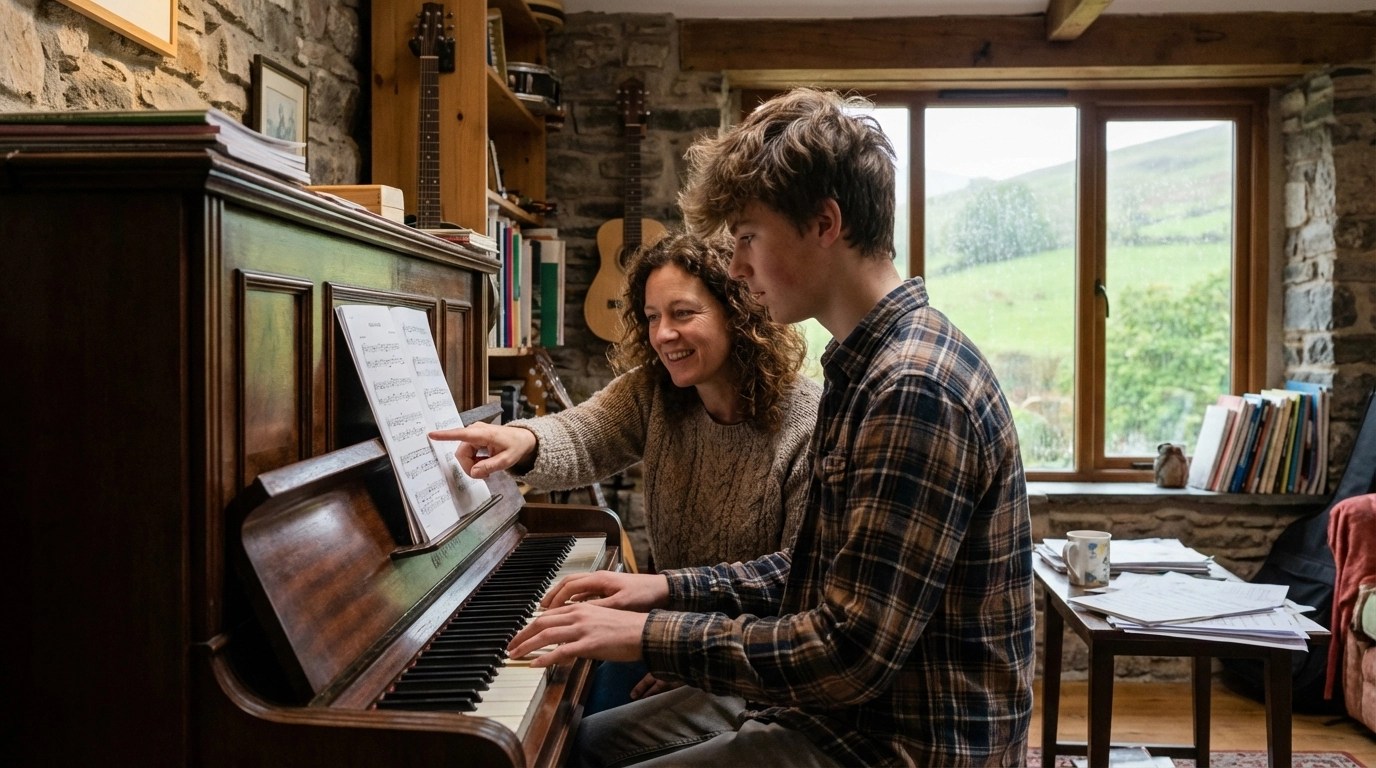
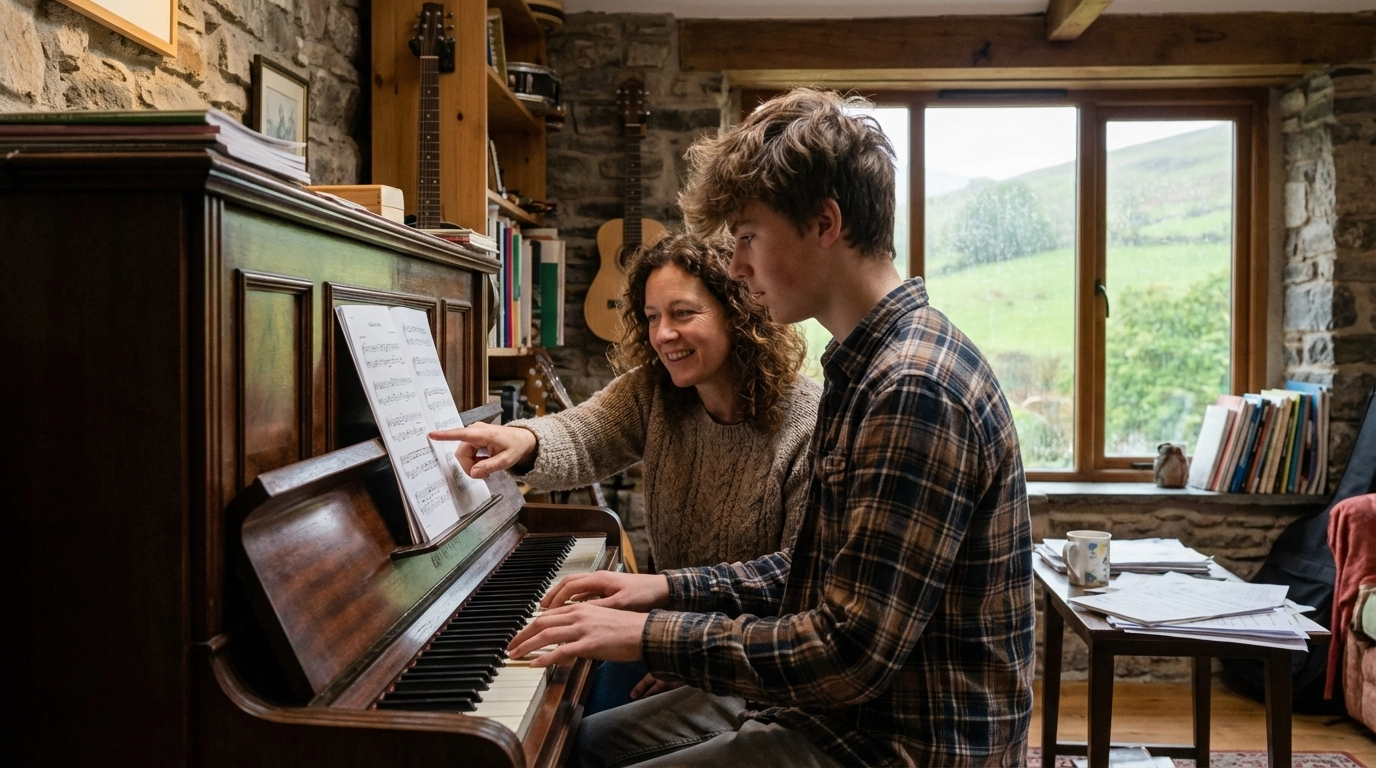
    That said, there’s something special about sitting at a piano with your teacher beside you. In-person lessons offer that immediate, tangible connection that’s hard to replicate through a screen.

    When your teacher can reach over and adjust your hand position, there’s a directness to the learning experience that many students find invaluable.

    For those lucky enough to live in or near Ceredigion, our AberMusic Studio offers exactly this experience. There’s a reason in-person piano lessons have been the gold standard for centuries: they work.

    Which Learning Style Suits Online Lessons?

    Online piano lessons might be your perfect match if you tick a few of these boxes:

    You’re self-motivated. Learning from home means you need a bit of internal drive. There’s no teacher physically present to keep you accountable between lessons, so you’ll need to stay on top of your practice schedule yourself.

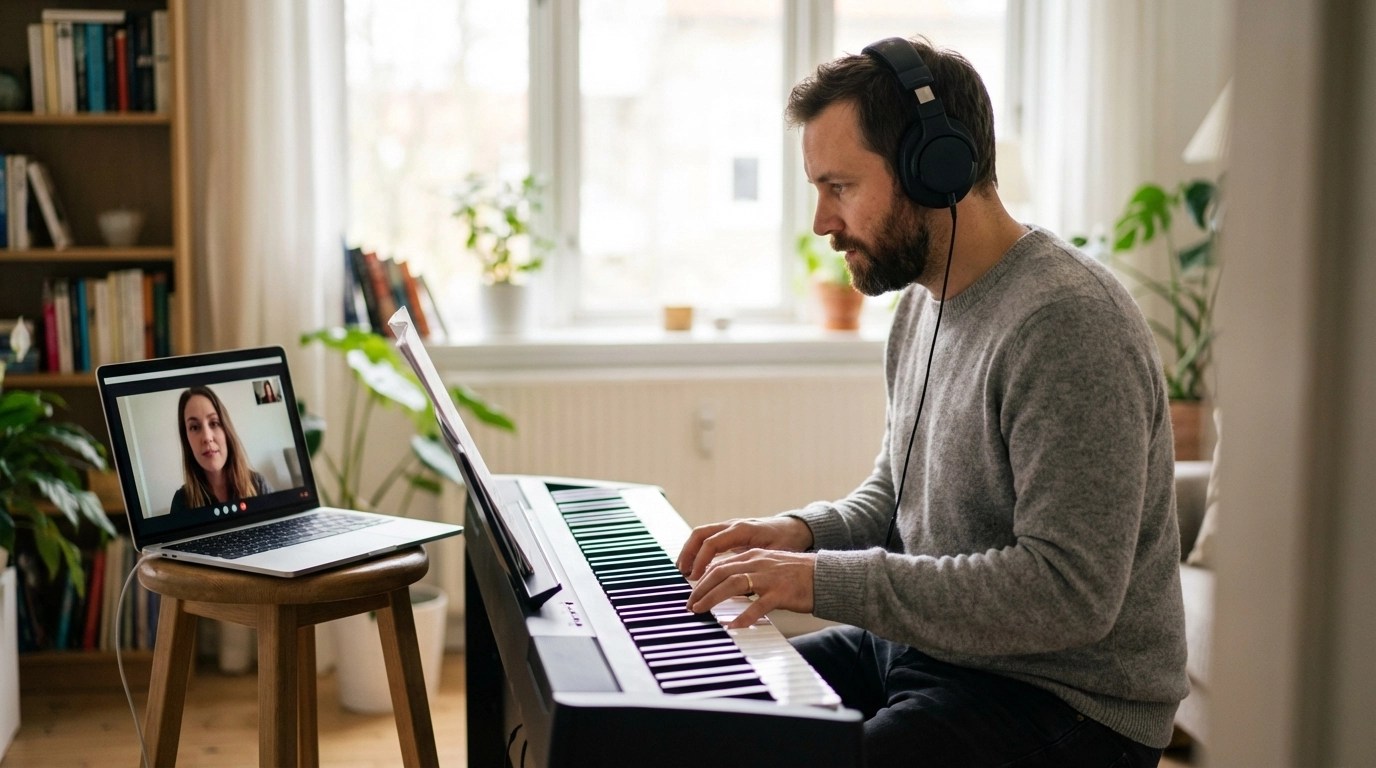
    You value flexibility. Got a hectic work schedule? Kids with unpredictable routines? Living somewhere rural without easy access to music teachers? Online lessons let you learn from your living room, your holiday rental, or anywhere with a decent internet connection.

    You’re comfortable with technology. If the idea of setting up a video call makes you break out in a cold sweat, online lessons might feel frustrating. But if you’re reasonably tech-savvy (or willing to learn), you’ll find the setup pretty straightforward.

    You want access to specialist teachers. This is a big one. With online piano lessons, geography stops being a barrier. You could be learning from a conservatoire-trained musician without living anywhere near a conservatoire. Our teachers at AberMusic, for instance, bring professional training and performance experience to students anywhere in the world.

    You learn well independently. Some people thrive when they can revisit concepts at their own pace, watch recordings of their lessons, and work through challenges in their own time. If that sounds like you, online learning could be brilliant.

    Which Learning Style Suits In-Person Lessons?

    On the flip side, in-person piano lessons might be the better choice if these points resonate:

    You’re a beginner who needs hands-on guidance. When you’re just starting out, having a teacher who can physically demonstrate proper technique: hand position, posture, pedal use: can make a huge difference. Small adjustments that take seconds in person might take several minutes to communicate over video.

    You thrive on direct interaction. Some students simply learn better when there’s another human in the room. The energy of a shared space, the immediate back-and-forth, the subtle cues you pick up from being physically present: these things matter to certain learners.

    You need external accountability. Let’s be honest: if left to your own devices, would you actually practise? For many students, knowing they have to show up somewhere at a set time keeps them on track in a way that logging onto Zoom from their sofa doesn’t.

    You’re a younger learner. For children (we teach students from age 5 at AberMusic), in-person lessons often work better. Younger students typically benefit from the structure and engagement that comes with face-to-face interaction. That said, plenty of kids do brilliantly online too: it really depends on the individual child.

    You want the social aspects. Recitals, group sessions, and simply being part of a local musical community can be hugely motivating. If that appeals to you, in-person lessons at a dedicated studio like ours in Ceredigion offer something online lessons can’t quite replicate.

    The Honest Trade-Offs

    Let’s talk about the elephant in the room: neither option is perfect.

    Online lessons can suffer from technical hiccups. A dodgy internet connection, audio lag, or video quality issues can occasionally disrupt the flow of a lesson (though these are usually manageable with a bit of setup and troubleshooting).

    In-person lessons require travel and fixed scheduling. If you’re commuting to and from lessons, that’s time (and often money) that adds up. They’re also less forgiving when life throws curveballs: bad weather, illness, or last-minute schedule changes can mean cancelled lessons.

    Split scene showing online and in-person piano lessons, comparing learning environments for students

    Why Not Both?

    Here’s a thought that often gets overlooked: you don’t necessarily have to choose just one.

    Some of our AberMusic students do a hybrid approach: mostly online piano lessons for convenience, with occasional in-person sessions at our Ceredigion studio when they want that hands-on experience. It’s the best of both worlds.

    Others start with in-person lessons to build their foundation, then transition to online as they become more confident and independent. There’s no rule saying you have to stick with one format forever.

    What AberMusic Offers

    Whether you choose online or in-person, here’s what you can expect when you learn piano with us:

    • Conservatoire-trained teachers who are working musicians as well as experienced educators
    • Lessons for students aged 5 and up, from complete beginners to advanced players
    • In-person lessons at our studio in Aberystwyth (perfect for locals!)
    • Online piano lessons available worldwide: wherever you are, we can teach you
    • Complimentary access to our student portal and practice app, helping you stay organised and motivated between lessons

    We’re pretty passionate about making music education accessible, whether you’re down the road from us or on the other side of the planet.

    So, Which Should You Choose?

    Ultimately, the “right” choice depends entirely on your circumstances, your personality, and your goals.

    If you value flexibility, have a busy lifestyle, or don’t live near quality music teachers, online piano lessons could transform your learning experience. If you prefer hands-on guidance, thrive on in-person connection, or have a young learner in the family, traditional lessons might suit you better.

    The most important thing? Just start. Whether you’re pressing keys in our Ceredigion studio or connecting with us from your kitchen table in Toronto, what matters is that you’re making music.

    Ready to Begin Your Piano Journey?

    We’d love to help you figure out which option works best for you. At AberMusic, we offer both in-person piano lessons at our studio in Ceredigion and online piano lessons for students anywhere in the world.

    Book your first lesson with AberMusic today and let’s get you playing. Whether you’re five or fifty-five, a complete beginner or looking to level up, our friendly, conservatoire-trained teachers are here to guide you every step of the way.

    Got questions about whether online or in-person suits you best? Just get in touch (we’re always happy to chat!)