
There's a quiet revolution happening in music education. The idea that meaningful piano lessons require sharing the same physical space as your teacher? It's a notion that's slowly, gracefully, becoming obsolete.
Online piano lessons have matured. What was once a compromise has become, for many students, the preferred way to learn. But not all online music lessons are created equal: and before you book your first session, there are a few things worth knowing.
Consider this your field guide.
1. Geography No Longer Limits Your Options
Perhaps the most liberating aspect of online piano lessons is this: your teacher no longer needs to live in your town. Or your country, for that matter.
This matters more than you might think. Finding a conservatoire-trained instructor who specialises in your particular interests: whether that's late Romantic repertoire, jazz improvisation, or preparing for grade exams: used to require luck and proximity. Now it simply requires an internet connection.
At AberMusic, our instructors hold credentials from some of the UK's finest conservatoires. That level of training is available to you whether you're in Aberystwyth, London, or somewhere else entirely.
2. You'll Need Decent Technology (But Nothing Extraordinary)
Let's address the practical side. Online lessons do require a few things: a reliable internet connection, a device with a camera and microphone, and ideally a setup that allows your teacher to see your hands clearly.
You don't need professional-grade equipment. A laptop or tablet positioned thoughtfully will do the job. Some students use a second device or an adjustable stand to improve camera angles: but these are refinements, not requirements.
The technology should fade into the background. When it works well, you forget it's there.
3. Sound Quality Has Its Limits: And That's Okay
Here's an honest truth: video calls compress audio. Subtle nuances in tone: the delicate decay of a note, the precise weight of a chord: can sometimes be harder to perceive through a screen.
But with a high-level teacher, nuance is never a hindrance. It simply changes how you work. Instead of relying on “can you hear that?” moments, great online teaching becomes more descriptive and more precise: where the sound sits, how the arm weight transfers, what kind of touch produces the colour you want, and why it matters musically.
In practice, this often leads to a deeper understanding for the student. You learn to name what you’re doing, repeat it deliberately, and recreate it reliably. It’s different from being in the same room: but the quality of the result is absolutely not “less”.
4. Playing Together Online: Unison Is Tricky, Accompaniment Is Absolutely Possible
Internet latency means traditional unison duets (both of you trying to play the same beat at the same time) can be tricky on a normal video call.
But that doesn’t mean “playing together” disappears. Live accompaniment is absolutely possible: and it’s a regular part of AberMusic’s online lessons. The setup simply changes: the teacher can accompany the student (or vice versa) in a way that stays musical and useful, without chasing perfect millisecond alignment.
This is especially true in voice lessons. Steven (our founder) frequently provides live piano accompaniment in online voice lessons with great success: helping singers work on timing, phrasing, confidence, and performance craft in a way that feels genuinely collaborative.
And for a high-authority reality check: AberMusic students have been accepted into top conservatoires and prestigious musical theatre schools through 100% online instruction. The quality of the result is identical to in-person learning: because what matters most is the teaching, the structure, and the work you do between lessons.
5. Recording Your Lessons Becomes Effortless
One of the quieter advantages of music lessons online: recording is built in.
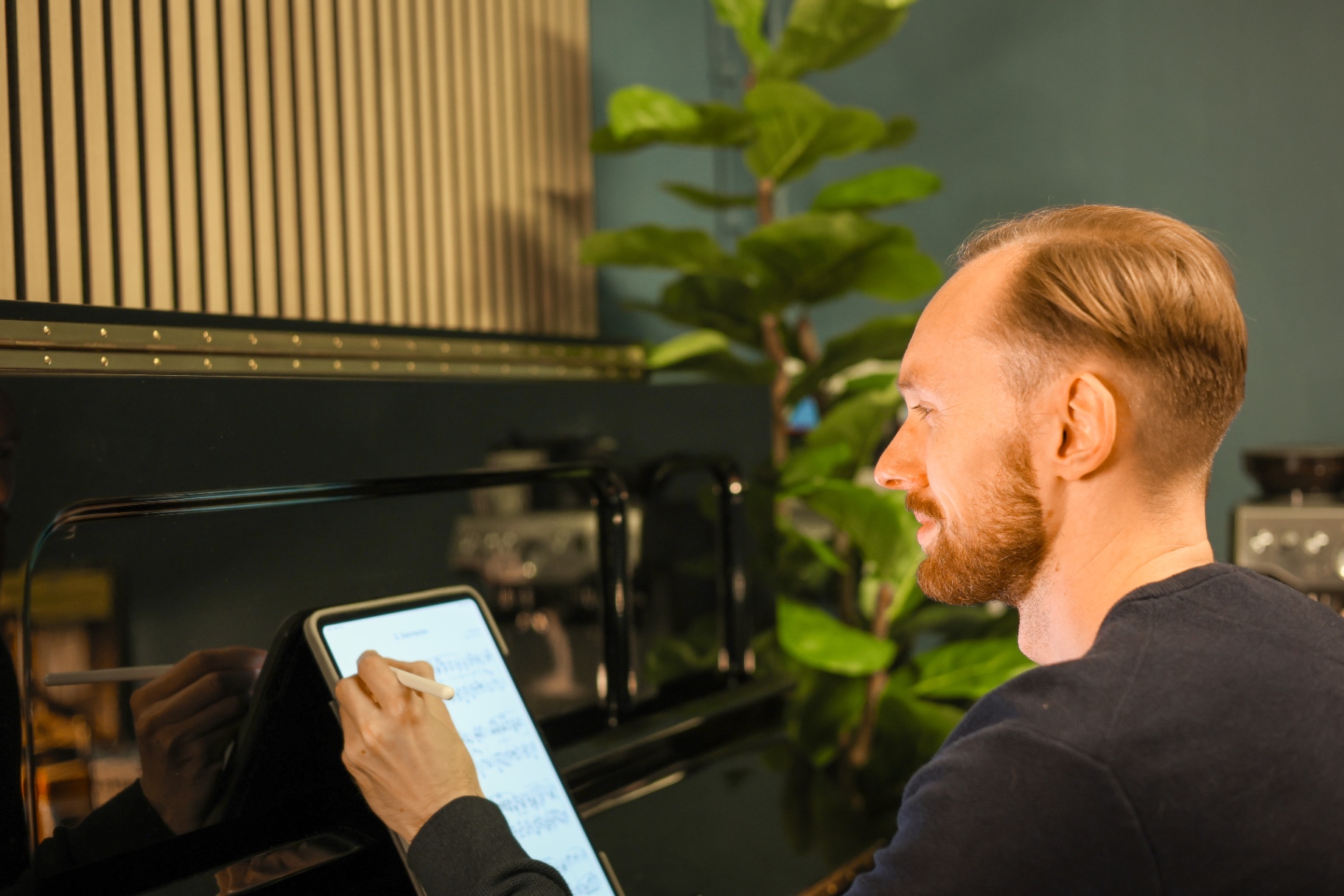
Platforms like Zoom allow you to capture your entire lesson with a single click. This means you can revisit your teacher's demonstrations, re-hear their feedback on tricky passages, and hold yourself accountable during practice sessions. No more relying on hastily scribbled notes or half-remembered instructions.
For students serious about progress, this alone can justify the format.
6. The Right Teacher Matters More Than the Medium
This deserves emphasis. A brilliant teacher delivering lessons online will serve you far better than a mediocre teacher sitting beside you.
The quality of instruction: the depth of musical understanding, the ability to diagnose problems, the skill in communicating solutions: these are what determine your progress. The delivery method is secondary.
Yes: many AberMusic teachers are conservatoire-trained, and we value that background because it tends to correlate with high musical standards and professional-level training.
But the non-negotiable for us isn’t the label: it’s the standard. If we recommend a teacher who doesn’t have a formal conservatoire degree, they’ve been carefully selected for exceptional ability and genuinely conservatoire-standard teaching. We only work with teachers who share AberMusic’s approach to quality and professionalism, and we provide optional resources, CPD and peer support (including optional guidance from our founder, Steven) to help everyone deliver a brilliant, consistent learning experience.
7. Flexibility Is Genuine, Not Just Marketing
The convenience of online piano lessons is real and substantial.
No travel time. No battling traffic or public transport. No rearranging your entire evening around a fixed lesson slot in a specific location. You can take your lesson from home, from a holiday rental, from a quiet room at work during your lunch break.
This flexibility makes consistency easier. And consistency, in music, is everything.
8. Structure and Accountability Still Matter
The freedom of online learning can be a double-edged sword. Without the ritual of physically travelling to a lesson, some students find it easier to become passive: to let practice slide, to approach lessons unprepared.
This is where a structured approach becomes essential. At AberMusic, our students access a dedicated student portal and practice app designed to maintain momentum between lessons. Progress tracking, practice logs, curated resources: these tools transform online lessons from isolated events into an ongoing educational journey.
The technology supports you. But you still have to show up, mentally and musically.
9. Live Feedback Cannot Be Replicated by Apps
A note on the alternatives: there are many piano-learning apps available now, some of them quite sophisticated. They have their place: particularly for absolute beginners exploring whether piano is right for them.
But apps cannot watch you play and notice that your wrist is too tense. They cannot hear your interpretation and suggest a different way of thinking about a phrase. They cannot answer the question you didn't know you needed to ask.
Live online lessons with a qualified teacher offer something fundamentally different: responsive, personalised instruction. Real-time correction prevents bad habits from taking root. This is the difference between learning efficiently and simply going through the motions.
10. The Best Online Experience Feels Personal
Finally, and perhaps most importantly: good online piano lessons don't feel like a transaction. They feel like a relationship.
The teachers who excel in this format are those who create genuine connection despite the screen. They remember what you struggled with last week. They celebrate your progress. They understand your goals and shape their teaching accordingly.
When you find that kind of teacher: someone who combines conservatoire-level expertise with warmth and adaptability: the online format becomes invisible. What remains is simply excellent teaching.
11. A Bespoke Connection
When you sign up through AberMusic, you have the freedom to choose a teacher who inspires you from our handpicked network, or we can personally match you with the perfect fit for your goals. While we handle the booking and billing admin on their behalf, your lessons are delivered directly by your chosen independent teacher: ensuring a premium, bespoke experience from your very first session.
A Final Thought
Online piano lessons aren't for everyone. Some students genuinely prefer the energy of a shared physical space, and that's entirely valid.
But if you've been hesitant about trying online lessons: uncertain whether they could offer the depth and quality you're looking for: consider this your permission to explore.
The barriers that once made online learning feel like a compromise have largely dissolved. What remains is an opportunity: access to exceptional teaching, on your schedule, from wherever you are.
If that sounds appealing, we'd love to hear from you. Visit AberMusic to learn more about our approach to music lessons online, or explore our journal for more insights into learning music well.
The Right Teacher Matters More Than the Medium.