
September often feels like a month of new beginnings. New school shoes, new routines, new subjects : and, for many children, a growing curiosity about music.
New research from the Royal Philharmonic Orchestra has found that 85% of children are interested in having the opportunity to learn a musical instrument, up from 80% in 2023.
The piano was the most popular choice, selected by 32% of children, followed by guitar at 26% and drums at 25%.
That is an encouraging picture. It suggests that learning an instrument is not simply something adults encourage children to do. It is something many children already want for themselves.
So, if your child has mentioned learning piano, singing, drums or another instrument, how can you help them make a positive start?
Begin with their curiosity
The best starting point is often a simple question:
“What would you like to be able to do?”
Your child may be drawn to the sound of a particular instrument. They may want to play a favourite song, accompany themselves while singing, perform for family members or understand how music works. They may simply like the idea of making a sound that belongs to them.
There is no single right reason to learn.
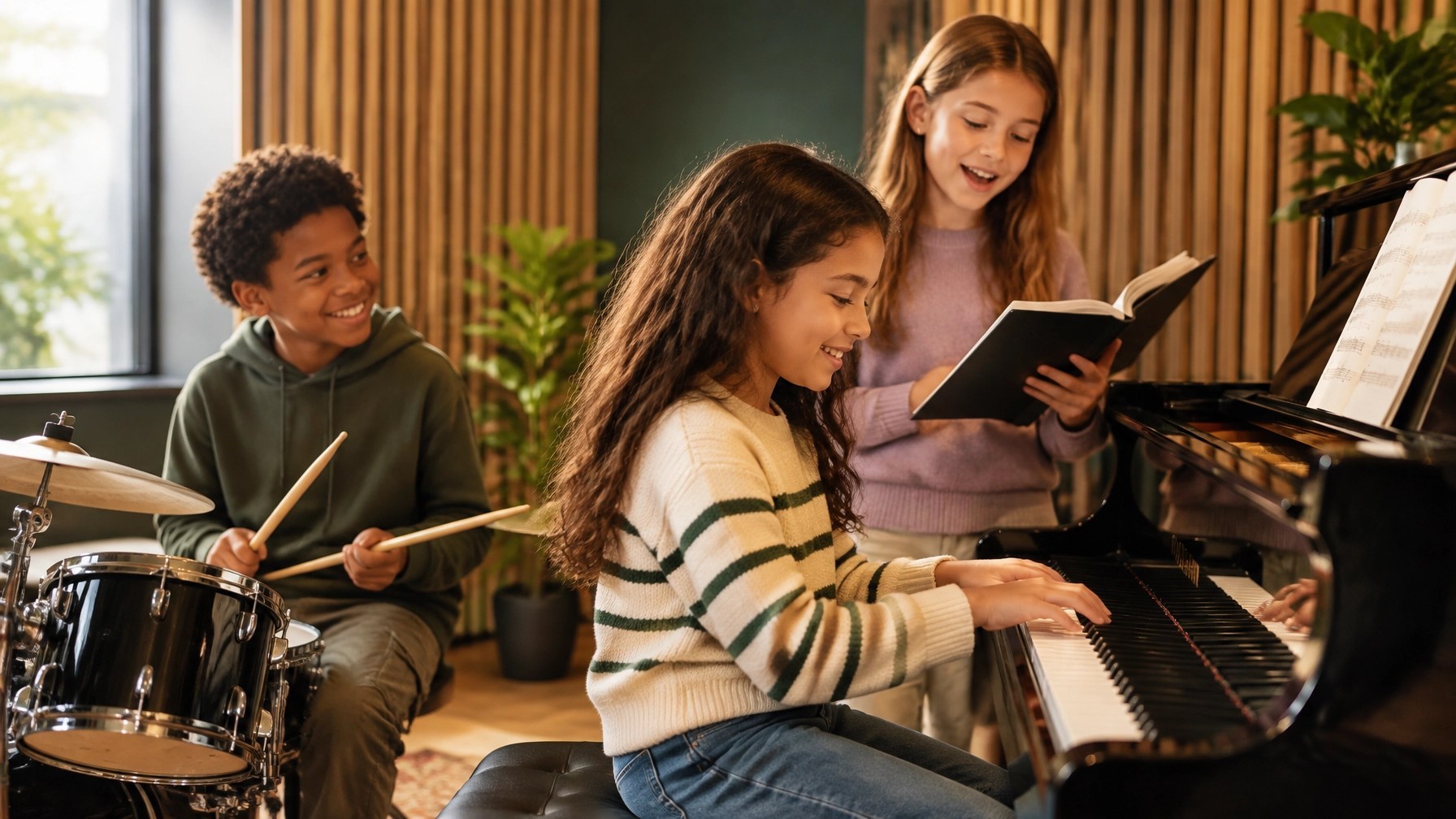
Try to listen for what interests them rather than deciding what they should learn. A child who wants to play piano may be excited by melody and harmony. Another may be drawn to the energy of drums. Someone else may enjoy singing, composing or finding patterns in music theory.
Their first motivation does not need to be ambitious. Enjoyment is enough.
Help them explore before making big decisions
Children’s interests can change quickly, especially when they are discovering something new. A child who is fascinated by drums one week may become captivated by piano the next.
That is perfectly normal.
You can support this exploration by listening to different kinds of music together, watching live performances, visiting concerts or looking at instruments in person. If you have a piano, keyboard or drum pad at home, allow your child to experiment without worrying about whether they are doing it “properly”.
This early exploration helps children notice what they enjoy:
- Do they like rhythm and movement?
- Are they interested in melodies?
- Do they enjoy singing or using their voice?
- Are they curious about how music is put together?
- Do they like the feeling of repeating something until it works?
These answers can help point towards an instrument or type of lesson that feels natural to them.
Choose lessons that suit the child, not just the timetable
A good lesson should give a child a sense of progress while leaving room for their personality. Children learn in different ways and at different speeds. Some enjoy clear structure and written music. Others respond best to playing by ear, practical demonstrations or creative activities.
It is worth considering:
- The child’s age and attention span
- The type of music they enjoy
- Whether they prefer in-person or online learning
- How much time they can realistically give to practice
- Whether the lesson time fits comfortably around school and family life
Music lessons are available for children from age five upwards, as well as for adults. At AberMusic, families can explore piano lessons, voice lessons, drum lessons and music theory lessons.
AberMusic matches students with conservatoire-trained teachers who are independent professionals. AberMusic handles booking and billing on the teacher’s behalf, while lessons are delivered by your chosen teacher. In other words, AberMusic helps you book lessons with independent teachers; lesson delivery is by your chosen teacher.
For families in or near Ceredigion, lessons can take place in person at the Market Hall studio. Online lessons are also available worldwide, which can be useful when travel, location or family routines make online learning a better fit.
Make the first step feel manageable
The idea of learning an instrument can sometimes seem bigger than it needs to be. Children do not need to be preparing for a concert or examination on their first day. They simply need an inviting first experience.
A first lesson might involve:
- Getting to know the instrument
- Learning how to sit, stand or hold equipment comfortably
- Exploring a few sounds
- Playing a simple rhythm or melody
- Discovering how music is written down
- Talking about the kind of music the child enjoys
A relaxed beginning can help build confidence. It also gives the child and teacher a chance to discover how best to work together.
Parents can help by keeping expectations positive and realistic. Asking “What did you enjoy?” may be more encouraging than immediately asking, “How much did you practise?”
Create a small, regular practice habit
Practice does not have to mean long sessions at the instrument. For a young beginner, a few focused minutes can be valuable, particularly when it happens regularly.
The most useful habit is one that fits naturally into family life. Some children prefer practising straight after school; others concentrate better in the morning or after dinner. Keeping the instrument accessible can also make it easier for a child to play spontaneously.
It can help to divide practice into small steps:
- Warm up or revisit something familiar.
- Focus on one short section.
- Repeat it slowly and carefully.
- Finish with something enjoyable.
The aim is not to make every practice session perfect. It is to help the child feel that progress is possible.
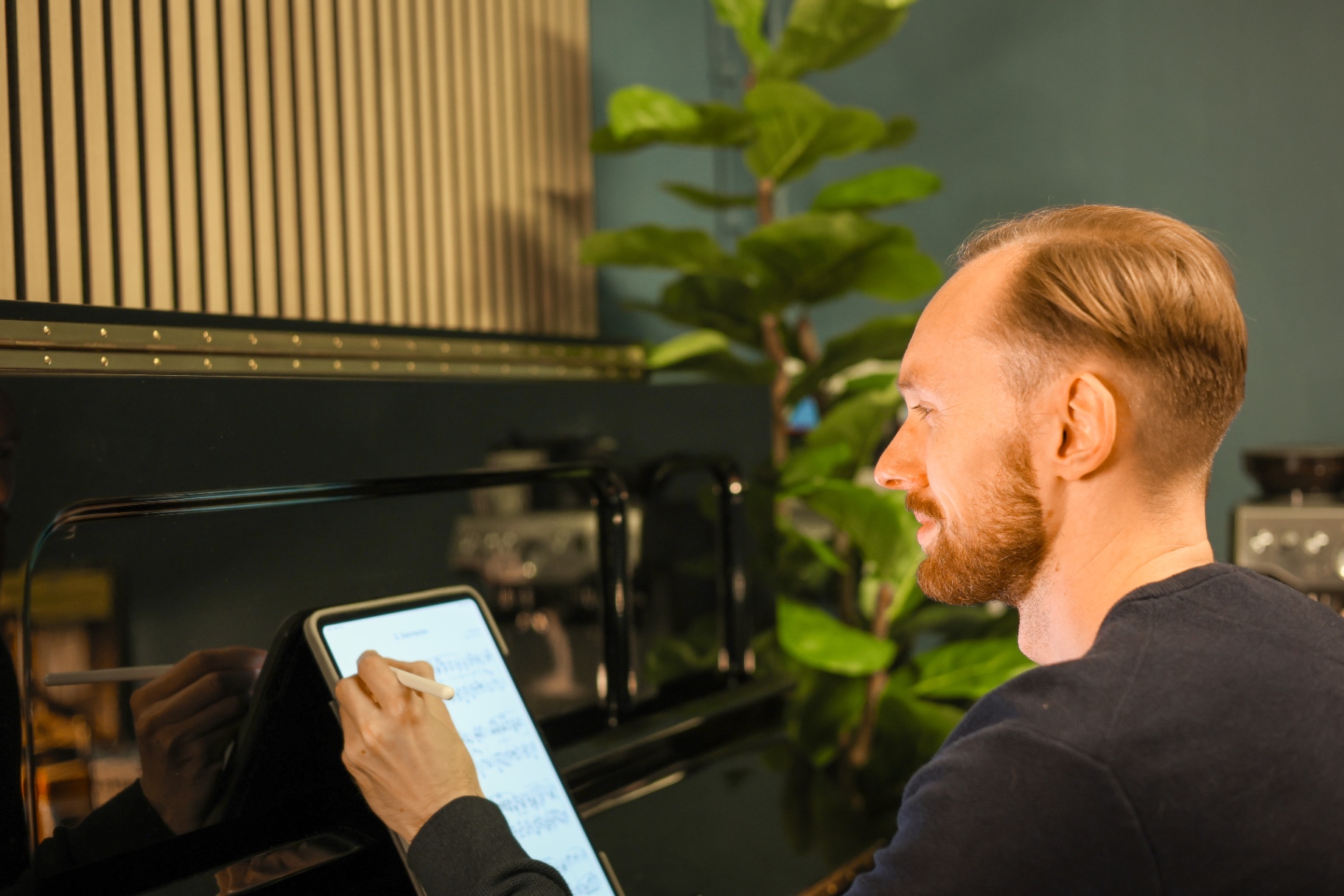
Every AberMusic student receives complimentary access to the student portal and practice app. These resources are designed to support learning between lessons, help students keep track of their progress and make practice feel more connected to what they are working on with their chosen teacher.
Let progress look different from week to week
Learning music is not always a straight line. A child may make rapid progress in one area and find another more challenging. They may play confidently one week and feel hesitant the next.
That is part of the process.
It is useful to notice small achievements:
- Remembering a new note
- Keeping a steady beat
- Singing with greater confidence
- Playing a short piece from beginning to end
- Understanding a new musical symbol
- Returning to a difficult passage rather than giving up
These moments matter because they show children that musicianship grows through curiosity, patience and repeated discovery.
It is also important to leave room for enjoyment outside formal practice. Playing a favourite tune, improvising, singing along to the radio or tapping out rhythms on a table can all strengthen a child’s relationship with music.
Follow the child’s lead
The RPO’s research gives us a positive reminder: children already have a strong interest in learning music. Our role as adults is not to turn that interest into pressure. It is to help make the opportunity accessible, welcoming and enjoyable.
If your child has been asking about piano, voice, drums or music theory, take that interest seriously. Ask what they would like to try. Give them time to explore. Find a lesson setting that suits their age, personality and routine. Then encourage steady progress without losing sight of the original reason they wanted to begin.
For some children, the piano will become a lifelong passion. For others, lessons may lead them towards singing, drums, composition, theory or another instrument later on. Every musical journey starts with a first sound, a first question or a simple wish to learn.
Visit abermusic.wales to find a lesson time that suits you.
Leave a Reply