Category: Education

  • 85% of Children Want to Learn an Instrument : Here’s How to Help Them Start

    85% of Children Want to Learn an Instrument : Here’s How to Help Them Start

    September often feels like a month of new beginnings. New school shoes, new routines, new subjects : and, for many children, a growing curiosity about music.

    New research from the Royal Philharmonic Orchestra has found that 85% of children are interested in having the opportunity to learn a musical instrument, up from 80% in 2023.

    The piano was the most popular choice, selected by 32% of children, followed by guitar at 26% and drums at 25%.

    That is an encouraging picture. It suggests that learning an instrument is not simply something adults encourage children to do. It is something many children already want for themselves.

    So, if your child has mentioned learning piano, singing, drums or another instrument, how can you help them make a positive start?

    Begin with their curiosity

    The best starting point is often a simple question:

    “What would you like to be able to do?”

    Your child may be drawn to the sound of a particular instrument. They may want to play a favourite song, accompany themselves while singing, perform for family members or understand how music works. They may simply like the idea of making a sound that belongs to them.

    There is no single right reason to learn.

    Try to listen for what interests them rather than deciding what they should learn. A child who wants to play piano may be excited by melody and harmony. Another may be drawn to the energy of drums. Someone else may enjoy singing, composing or finding patterns in music theory.

    Their first motivation does not need to be ambitious. Enjoyment is enough.

    Three diverse children exploring piano, drums and singing together in a warm modern music studio

    Help them explore before making big decisions

    Children’s interests can change quickly, especially when they are discovering something new. A child who is fascinated by drums one week may become captivated by piano the next.

    That is perfectly normal.

    You can support this exploration by listening to different kinds of music together, watching live performances, visiting concerts or looking at instruments in person. If you have a piano, keyboard or drum pad at home, allow your child to experiment without worrying about whether they are doing it “properly”.

    This early exploration helps children notice what they enjoy:

    • Do they like rhythm and movement?
    • Are they interested in melodies?
    • Do they enjoy singing or using their voice?
    • Are they curious about how music is put together?
    • Do they like the feeling of repeating something until it works?

    These answers can help point towards an instrument or type of lesson that feels natural to them.

    Choose lessons that suit the child, not just the timetable

    A good lesson should give a child a sense of progress while leaving room for their personality. Children learn in different ways and at different speeds. Some enjoy clear structure and written music. Others respond best to playing by ear, practical demonstrations or creative activities.

    It is worth considering:

    • The child’s age and attention span
    • The type of music they enjoy
    • Whether they prefer in-person or online learning
    • How much time they can realistically give to practice
    • Whether the lesson time fits comfortably around school and family life

    Music lessons are available for children from age five upwards, as well as for adults. At AberMusic, families can explore piano lessons, voice lessons, drum lessons and music theory lessons.

    AberMusic matches students with conservatoire-trained teachers who are independent professionals. AberMusic handles booking and billing on the teacher’s behalf, while lessons are delivered by your chosen teacher. In other words, AberMusic helps you book lessons with independent teachers; lesson delivery is by your chosen teacher.

    For families in or near Ceredigion, lessons can take place in person at the Market Hall studio. Online lessons are also available worldwide, which can be useful when travel, location or family routines make online learning a better fit.

    Make the first step feel manageable

    The idea of learning an instrument can sometimes seem bigger than it needs to be. Children do not need to be preparing for a concert or examination on their first day. They simply need an inviting first experience.

    A first lesson might involve:

    • Getting to know the instrument
    • Learning how to sit, stand or hold equipment comfortably
    • Exploring a few sounds
    • Playing a simple rhythm or melody
    • Discovering how music is written down
    • Talking about the kind of music the child enjoys

    A relaxed beginning can help build confidence. It also gives the child and teacher a chance to discover how best to work together.

    Parents can help by keeping expectations positive and realistic. Asking “What did you enjoy?” may be more encouraging than immediately asking, “How much did you practise?”

    Create a small, regular practice habit

    Practice does not have to mean long sessions at the instrument. For a young beginner, a few focused minutes can be valuable, particularly when it happens regularly.

    The most useful habit is one that fits naturally into family life. Some children prefer practising straight after school; others concentrate better in the morning or after dinner. Keeping the instrument accessible can also make it easier for a child to play spontaneously.

    It can help to divide practice into small steps:

    1. Warm up or revisit something familiar.
    2. Focus on one short section.
    3. Repeat it slowly and carefully.
    4. Finish with something enjoyable.

    The aim is not to make every practice session perfect. It is to help the child feel that progress is possible.

    Every AberMusic student receives complimentary access to the student portal and practice app. These resources are designed to support learning between lessons, help students keep track of their progress and make practice feel more connected to what they are working on with their chosen teacher.
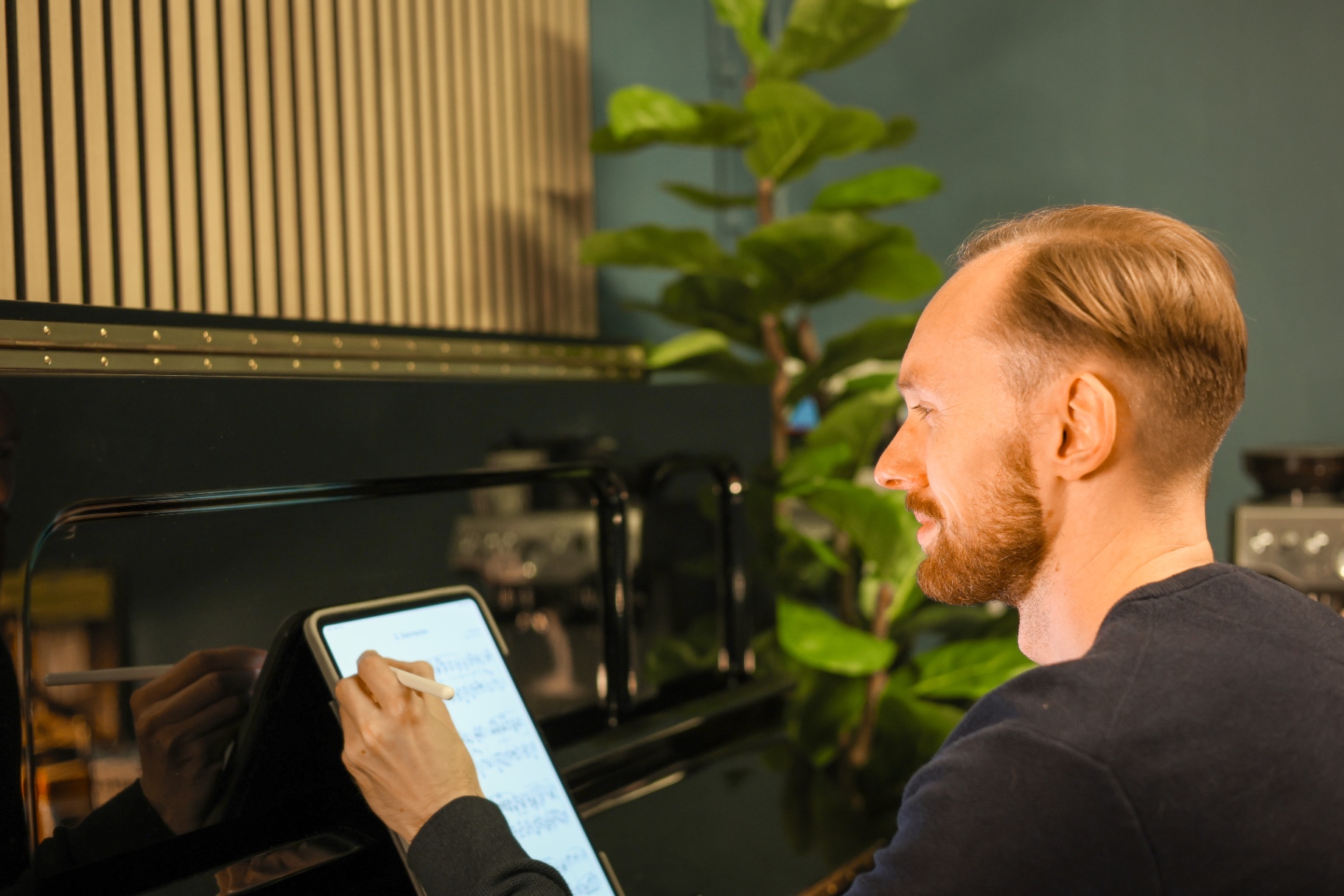
    A piano teacher using a tablet with digital sheet music in a modern studio

    Let progress look different from week to week

    Learning music is not always a straight line. A child may make rapid progress in one area and find another more challenging. They may play confidently one week and feel hesitant the next.

    That is part of the process.

    It is useful to notice small achievements:

    • Remembering a new note
    • Keeping a steady beat
    • Singing with greater confidence
    • Playing a short piece from beginning to end
    • Understanding a new musical symbol
    • Returning to a difficult passage rather than giving up

    These moments matter because they show children that musicianship grows through curiosity, patience and repeated discovery.

    It is also important to leave room for enjoyment outside formal practice. Playing a favourite tune, improvising, singing along to the radio or tapping out rhythms on a table can all strengthen a child’s relationship with music.

    Follow the child’s lead

    The RPO’s research gives us a positive reminder: children already have a strong interest in learning music. Our role as adults is not to turn that interest into pressure. It is to help make the opportunity accessible, welcoming and enjoyable.

    If your child has been asking about piano, voice, drums or music theory, take that interest seriously. Ask what they would like to try. Give them time to explore. Find a lesson setting that suits their age, personality and routine. Then encourage steady progress without losing sight of the original reason they wanted to begin.

    For some children, the piano will become a lifelong passion. For others, lessons may lead them towards singing, drums, composition, theory or another instrument later on. Every musical journey starts with a first sound, a first question or a simple wish to learn.

    Visit abermusic.wales to find a lesson time that suits you.

    A welcoming AberMusic studio with a piano, sheet music and comfortable practice space

  • In the Spotlight: PianoSphere Features AberMusic’s Steven Swindells

    In the Spotlight: PianoSphere Features AberMusic’s Steven Swindells

    Hey everyone! We have some incredibly exciting news to share with the AberMusic community today. Our very own Founder and Director, Steven Swindells, has been featured in the prestigious "Teacher Spotlight" over at PianoSphere!

    If you’ve been following our journey here at AberMusic, you know how much we value the intersection of high-quality education and the community that makes music possible. To see Steven’s hard work and dedication to the piano world recognised by such a massive industry hub is a special moment for all of us.

    In this post, we want to dive into what PianoSphere is all about, why this recognition matters, and most importantly, how this partnership benefits you, our students and parents, as you navigate your musical journey.

    What is PianoSphere?

    For those of you who haven't come across it yet, PianoSphere is much more than just a website; it is a dedicated piano marketplace and a thriving community hub. Based in the UK but serving a global audience, it’s the go-to destination for anyone serious about the keys.

    Whether you are looking to buy your very first upright, upgrade to a world-class grand piano, or sell a digital keyboard to make room for something new, PianoSphere connects buyers and sellers with total transparency. But it doesn't stop at sales. They also host a comprehensive directory of piano services, think tuners, movers, and restorers, and, of course, their famous teacher directory.

    Their mission is to bring the piano community together, and they do a brilliant job of it. By creating a space where educators, technicians, and players can coexist, they make the world of piano ownership and learning a lot less daunting.

    Steven Swindells studying music resources

    A Huge Thank You to the PianoSphere Team

    Before we go any further, we have to extend a massive thank you to the team at PianoSphere. Being chosen for the "Teacher Spotlight" isn't something that happens every day, and we are sincerely grateful for the recognition.

    At AberMusic, we strive to elevate the standard of music instruction in Ceredigion and beyond. Being featured alongside some of the best educators in the world is a testament to the vision Steven had when he founded this platform in 2023.

    Steven shared his thoughts on the feature:

    "I’m absolutely thrilled to be featured by PianoSphere. They’re doing such a brilliant job of bringing the piano community together, and it’s an honor to be recognised alongside so many other dedicated educators."

    Why This Matters for AberMusic Students

    You might be wondering, "That’s great for Steven, but what does it mean for me?"

    Actually, it means quite a lot! Our connection with platforms like PianoSphere helps us stay at the forefront of the industry. It ensures that when we match you with independent teachers in our network, those teachers are part of a broader, professional ecosystem that values excellence.

    Finding Your Perfect Instrument

    One of the biggest hurdles for new students, especially those transitioning from "just curious" to "seriously committed", is finding the right instrument. Using PianoSphere, our students can browse high-quality instruments with confidence.

    If you are currently practicing on a basic keyboard and feeling like you've hit a wall, it might be time to look into an upgrade. Whether you are working through Grade 3 material or moving into Intermediate territory, having a responsive instrument makes all the difference. PianoSphere provides a safe marketplace to find everything from entry-level digital pianos to heirloom-quality acoustics.

    Access to Expert Resources

    Beyond the marketplace, PianoSphere is a goldmine for expert resources. When you combine their industry insights with our own practice tips, you have a full toolkit for success.

    PianoSphere icon

    The AberMusic Philosophy: Matching You with Excellence

    While we are celebrating Steven’s individual recognition today, it’s important to remember the core mission of AberMusic. We are a matching and booking platform designed to connect you with the very best independent music teachers in the region and online.

    We know that who you learn from matters more than you think. Steven’s background, with a Master of Performance from the Royal College of Music and a BMus(Hons) from Birmingham Conservatoire, sets the bar for the kind of expertise we look for in the independent teachers we include in our network.

    AberMusic handles all the boring stuff, booking, payment admin, and scheduling, on the teacher’s behalf. This allows the independent teachers to focus entirely on what they do best: teaching you how to play. While Steven oversees the direction of AberMusic, the lesson delivery is handled by your chosen independent teacher, ensuring you get a personalised experience tailored to your specific goals.

    Preparing for the Next Step

    Being featured in the spotlight reminds us that music is a journey of constant growth. Whether you are looking for online piano lessons or prefer the traditional feel of in-person instruction, the goal is always progress.

    If you’re feeling inspired by Steven’s spotlight and want to kick your own practice into high gear, we recommend checking out some of our recent guides. For example, if you’re struggling to find time to sit at the keys, our 5-minute miracle method is a game-changer.

    And if you’re heading over to PianoSphere to look for a new instrument, don't forget to also stock up on the right learning materials. Choosing the best sheet music is just as important as the piano itself!

    A Quick Note on Music Theory

    Part of the reason Steven was likely featured is his holistic approach to music. You can't just play the notes; you have to understand the "why" behind them. For those of you diving into the world of harmony, remember that a solid foundation in theory makes every piece easier to learn.

    When you're analysing a piece, pay attention to the chord structures. For instance, in a standard C Major key, you might encounter a progression like I – IV – V – I. If you move into more complex arrangements, keep an eye out for inversions like the I⁶ or the V⁶⁴. Understanding these movements, from the major I to the minor vi or the diminished vii°, is what separates a player from a musician.

    If that sounds like Greek to you, don't worry! That’s exactly what the independent teachers in our network are here to help with. They can break down these concepts during your sessions so that the music on the page starts to make perfect sense.

    What’s Next for AberMusic?

    This spotlight is just the beginning. As we continue to grow our network of independent teachers, we are always looking for new ways to support our students. We are constantly updating our blog with advice on how to avoid common practice mistakes and how to prepare for different grade levels.

    We encourage all of our students, parents, and fellow piano enthusiasts to head over to PianoSphere and explore what they have to offer. It’s a fantastic resource that we are proud to be associated with.

    Whether you’re a beginner just starting at Grade 2 or an advanced player tackling Grade 6 repertoire, having a community like this behind you makes all the difference.

    Final Thoughts

    Thank you to PianoSphere for their feature and to our students and parents for being part of this journey with us. Your progress and passion are what drive us to keep seeking out these wonderful industry connections.

    Now, why not celebrate by heading to the piano for a quick 15-minute practice session? Or better yet, go check out the amazing marketplace over at PianoSphere: you might just find the piano of your dreams!

    Happy playing, everyone!

  • The Conservatoire Edge: Why Who You Learn From Matters More Than You Think

    The Conservatoire Edge: Why Who You Learn From Matters More Than You Think

    There's a quiet truth that separates those who simply learn an instrument from those who truly master one—the calibre of the person guiding them.

    In an age where music education has become increasingly commoditised—where anyone with a keyboard and a webcam can call themselves a teacher—the distinction between adequate instruction and exceptional mentorship has never been more consequential. This is precisely where the conservatoire advantage reveals itself.

    The Alchemy of Elite Training

    Conservatoires represent the pinnacle of musical academia. These institutions don't merely teach technique; they cultivate artistry. They transform talented individuals into complete musicians through a rigorous synthesis of performance mastery, theoretical depth, and interpretive sophistication.

    When your teacher has emerged from this tradition, you inherit something invaluable—access to a lineage of knowledge passed down through generations of the world's finest performers and pedagogues. This isn't simply about credentials hanging on a wall. It's about the subtle understanding of phrasing that can't be found in any textbook. It's about knowing precisely why Chopin's rubato breathes differently from Liszt's, and having the expertise to guide a student toward discovering this for themselves.

    Research consistently affirms what accomplished musicians have always understood—the one-to-one teaching relationship forms the cornerstone of serious music education. It's described as "the most important part of conservatoire education" for good reason. This concentrated, personalised instruction enables targeted feedback and individualised learning paths that simply cannot exist in any other setting.

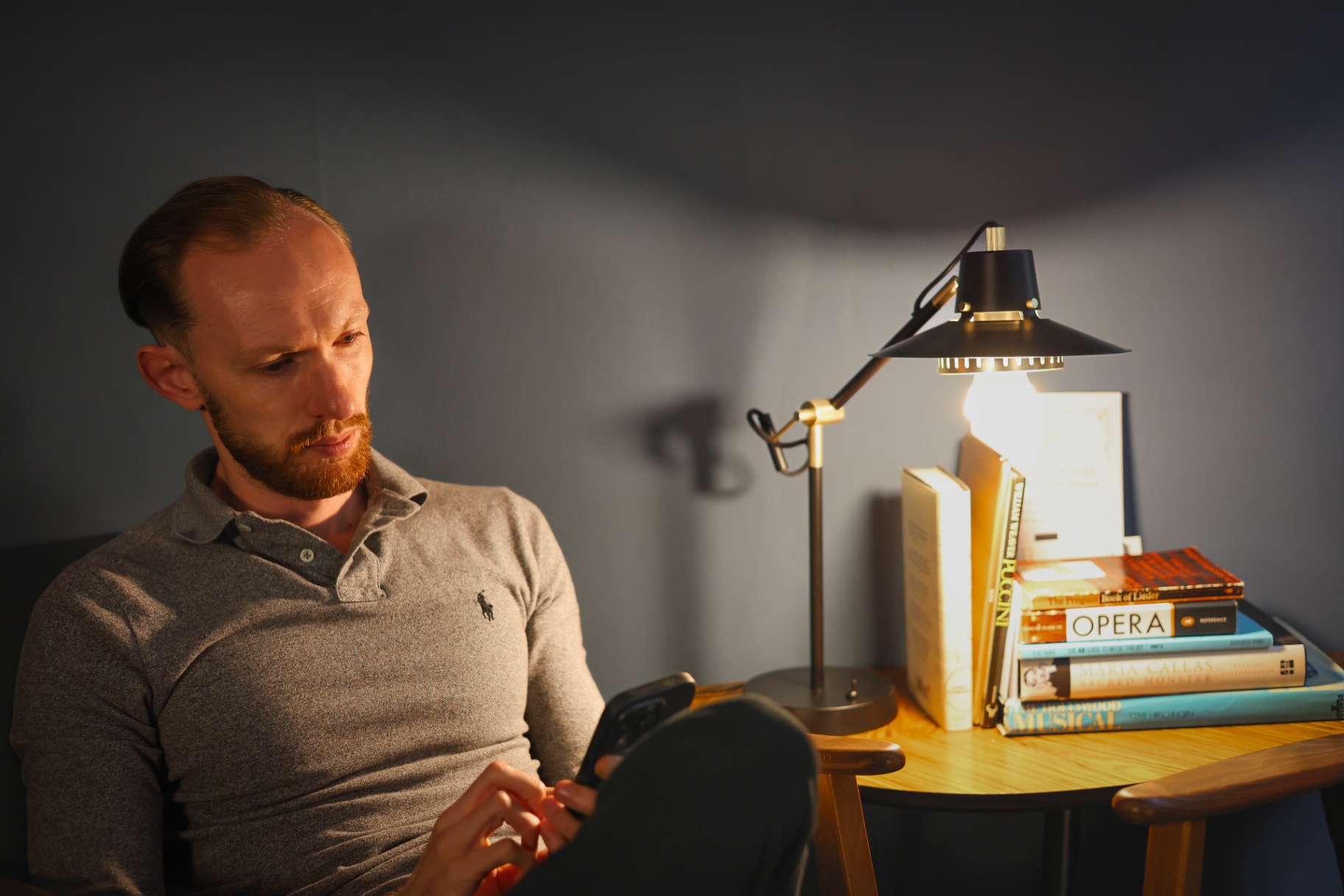
    AberMusic Studio Corner A modern piano, comfortable armchair with a houndstooth throw, and well-stocked bookshelves filled with sheet music, music theory books, and learning resources. Designed to inspire lessons with conservatoire-trained teachers in a creative environment.

    Beyond Notes on a Page

    What distinguishes conservatoire-trained instructors isn't merely their technical proficiency—though that, of course, is formidable. It's their understanding that music education must integrate knowledge and skills holistically. They guide students toward synthesising technical command with creativity and interpretation, rather than drilling isolated competencies in a vacuum.

    Consider the difference in approaching piano lessons with a conservatoire-trained teacher versus a well-meaning amateur. The latter might correct a wrong note. The former will address the wrong note whilst simultaneously observing that your wrist tension is affecting your tone production, that your breathing is disrupting your musical line, and that a deeper understanding of the harmonic structure would illuminate why the composer chose that particular voicing.

    This multi-dimensional awareness—the ability to hear, see, and understand everything happening simultaneously—is cultivated through years of intensive study at the highest level. It cannot be improvised. It cannot be approximated.

    The Mentorship Paradigm

    The student-tutor relationship in the conservatoire tradition extends far beyond instruction. It's a mentorship that shapes not only how students play, but how they think about music, how they approach practice, and how they develop as artists over time.

    At AberMusic Lessons, we've built our entire philosophy around this principle. Every instructor in our faculty brings conservatoire training and professional performance experience to their teaching. Whether you're exploring voice lessons, embarking on drum lessons, deepening your understanding through music theory lessons, or refining your piano technique, you're working with someone who has walked the path of serious musicianship themselves.

    This matters profoundly because teaching music well requires having navigated its challenges personally. A conservatoire-trained teacher understands the plateau you're experiencing because they've pushed through similar plateaus themselves, likely under the guidance of a master who helped them discover the breakthrough. They can draw upon a vast reservoir of pedagogical approaches, technical solutions, and musical insights accumulated through their own journey.

    A Proven Path to Excellence

    The “Conservatoire Edge” isn’t just a nice idea—it’s a proven foundation for students who want to aim right at the top. AberMusic’s high-standard, conservatoire-led instruction has helped students build the technique, musicianship, and confidence needed to step into competitive audition rooms and succeed.

    We’re proud that AberMusic students have gone on to study at world-renowned institutions including The Royal College of Music and Urdang—a real-world sign that this approach works when the goal is professional-level performance and training.

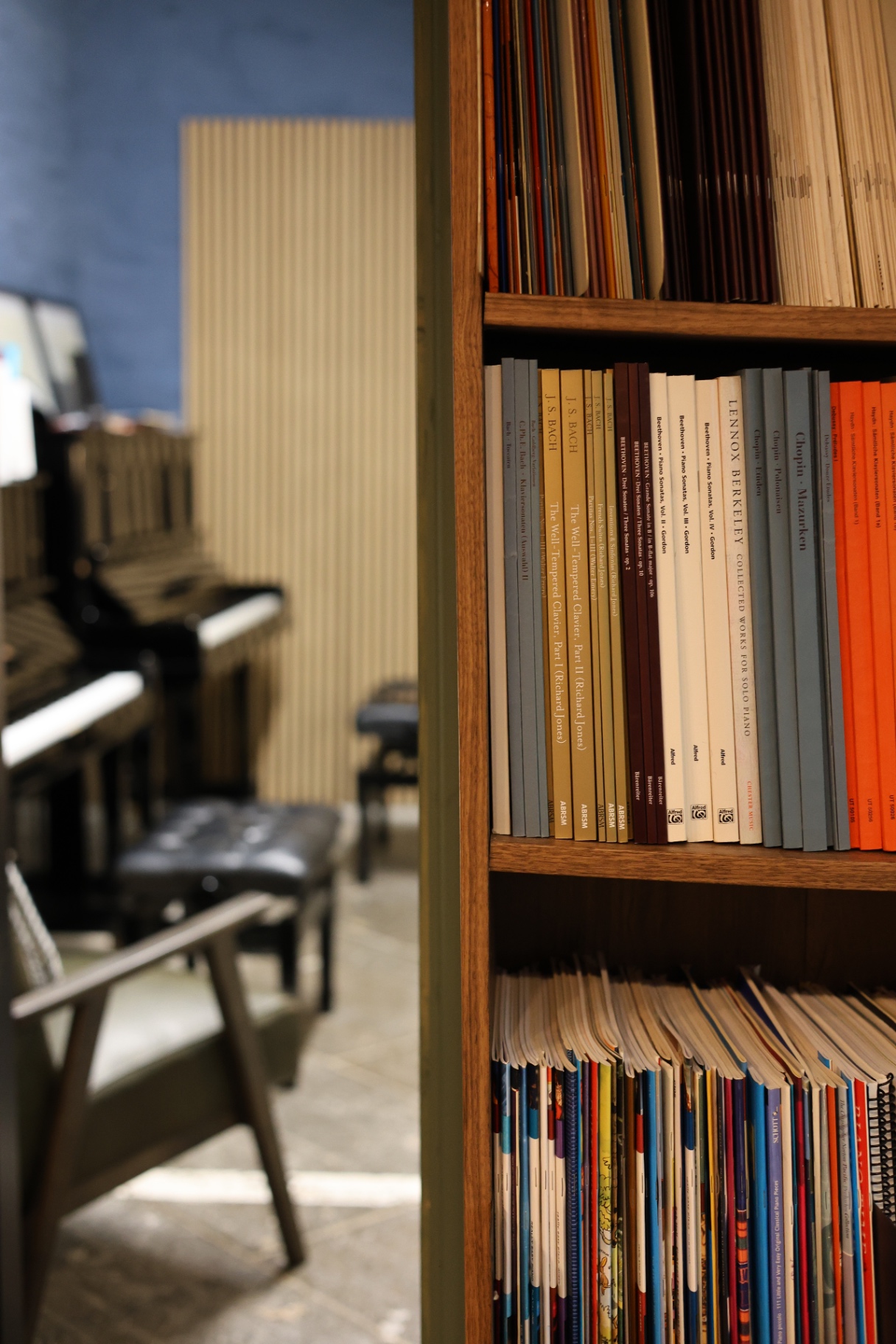
    AberMusic Studio Bookshelf Bookshelf filled with sheet music editions and music theory books in the AberMusic Studio; upright pianos and seating visible in the background, creating an organised and inspiring learning environment for piano and music theory lessons.

    The Hidden Costs of "Good Enough"

    There's a temptation, particularly in the digital age, to view music instruction as interchangeable. A lesson is a lesson, the thinking goes. The YouTube tutorial is free. The teacher down the road charges less.

    But music education doesn't work this way. Poor technique, once ingrained, can take years to unlearn: if it can be unlearned at all. Misunderstandings about fundamentals compound over time, creating invisible ceilings on progress. Perhaps most damagingly, uninspired teaching can extinguish the very passion that drew a student to music in the first place.

    The conservatoire-trained instructor recognises problems before they become habits. They build foundations that support advanced development years down the line. They kindle and protect the flame of musical curiosity because they remember what it felt like when their own teachers did the same for them.

    This is particularly crucial for children, whose early musical experiences shape their relationship with the art form for life. The difference between a child who abandons piano after two frustrated years and one who carries music as a lifelong companion often comes down to the quality of their early instruction.

    A Complete Ecosystem of Excellence

    Exceptional teaching deserves exceptional support. This is why AberMusic students receive complimentary access to our premium student portal and practice app: tools designed to extend the value of each lesson far beyond the scheduled hour.

    The portal serves as your personal musical headquarters: lesson notes, repertoire recommendations, practice assignments, and progress tracking all in one elegant interface. The practice app transforms daily work from a chore into an engaging, structured experience with features developed in consultation with our conservatoire faculty.

    These aren't afterthoughts or marketing additions. They're integral components of a carefully designed music education ecosystem—ensuring that the wisdom shared in lessons translates into real progress between sessions. Because we understand that mastery is built in the practice room, not just the studio.

    Glass coffee table in AberMusic studio waiting area A glass coffee table situated in AberMusic's welcoming studio waiting area, featuring a small plant, lamp, business cards, reed diffuser, and a variety of music books, opera magazines, and sheet music resources. The arrangement creates a creative and inspiring atmosphere for students.

    The Investment Perspective

    Excellence in music education is, admittedly, an investment. But it's worth examining what that investment actually purchases.

    You're not simply buying thirty or sixty minutes of someone's time. You're accessing years of elite training distilled into personalised guidance. You're receiving the benefit of pedagogical wisdom refined across generations. You're ensuring that every hour you spend practising moves you forward rather than reinforcing limitations.

    When viewed through this lens, conservatoire-quality instruction reveals itself as remarkably efficient. Students progress faster, encounter fewer obstacles, and—crucially—enjoy the journey more. The cost per unit of genuine advancement often proves lower than with less qualified instruction, even when the hourly rate appears higher.

    Finding Your Path

    Whether you're a complete beginner curious about your first piano lessons, an experienced vocalist seeking to refine your technique through advanced voice lessons, a drummer hungry for the precision that transforms good into exceptional, or a student of any age wishing to understand the architecture of music through comprehensive music theory lessons—the quality of your guide determines everything.

    At AberMusic, we invite you to experience what conservatoire-trained instruction feels like. To discover the difference that genuine expertise makes. To join a community of students who've chosen to pursue their musical aspirations with teachers worthy of those aspirations.

    Because in music, as in life, who you learn from matters more than you might think. It might, in fact, matter more than anything else.


    Discover the AberMusic difference. Visit abermusic.wales to explore our faculty and begin your journey with instruction that truly elevates.

  • 7 Mistakes You’re Making with Music Practice (And How to Fix Them)

    7 Mistakes You’re Making with Music Practice (And How to Fix Them)

    Let's be honest, we've all been there. You sit down at the piano (or pick up your instrument), run through your pieces a few times, and call it a day. But weeks later, you're still stumbling over the same tricky bar. Sound familiar?

    Here's the thing: it's not about how much you practice. It's about how you practice. Whether you're a child just starting out or an adult returning to music after years away, certain habits can quietly sabotage your progress without you even realising it.

    The good news? Once you know what to look out for, these mistakes are surprisingly easy to fix. So let's dive in and get your practice sessions working for you, not against you.


    Mistake #1: Mindlessly Repeating Errors

    This one's a biggie, and it's incredibly common. You play through a piece, hit a wrong note in bar 12, carry on, hit it again, carry on, and before you know it, that mistake is baked into your muscle memory like a bad habit you can't shake.

    Here's the uncomfortable truth: every time you play something incorrectly, you're actually practising the mistake. Your fingers don't know the difference between right and wrong, they just remember what you repeat.

    The fix: Stop the moment you make an error. Isolate the problem bar or phrase, slow it right down, and repeat it correctly several times before moving on. It feels tedious, but it's far quicker than unlearning a mistake later. Trust me on this one.

    AberMusic Studio Corner


    Mistake #2: Practising for Too Long Without Breaks

    We've all had those days where motivation strikes and we think, "Right, I'm going to practise for two hours straight!" And while the enthusiasm is brilliant, marathon sessions without breaks often do more harm than good.

    Your brain needs time to process and consolidate what you've learned. After about 25-30 minutes of focused practice, concentration starts to dip. You become mentally fatigued, your posture slumps, and you start making sloppy errors, which brings us right back to Mistake #1.

    The fix: Try the Pomodoro technique. Practice for 25 minutes, then take a 5-minute break. Get up, stretch, grab a cuppa, then come back refreshed. You'll find you accomplish far more in three focused 25-minute blocks than in one foggy 90-minute slog.


    Mistake #3: Ignoring the Metronome

    Ah, the metronome. That little clicking device (or app) that sits unused in the corner while you convince yourself your timing is "probably fine."

    Spoiler: it's probably not.

    Rushing through easy passages and dragging through difficult ones is completely natural: but it creates an uneven, unconvincing performance. A metronome keeps you honest. It's like a patient, non-judgmental friend who gently points out when you're speeding ahead or lagging behind.

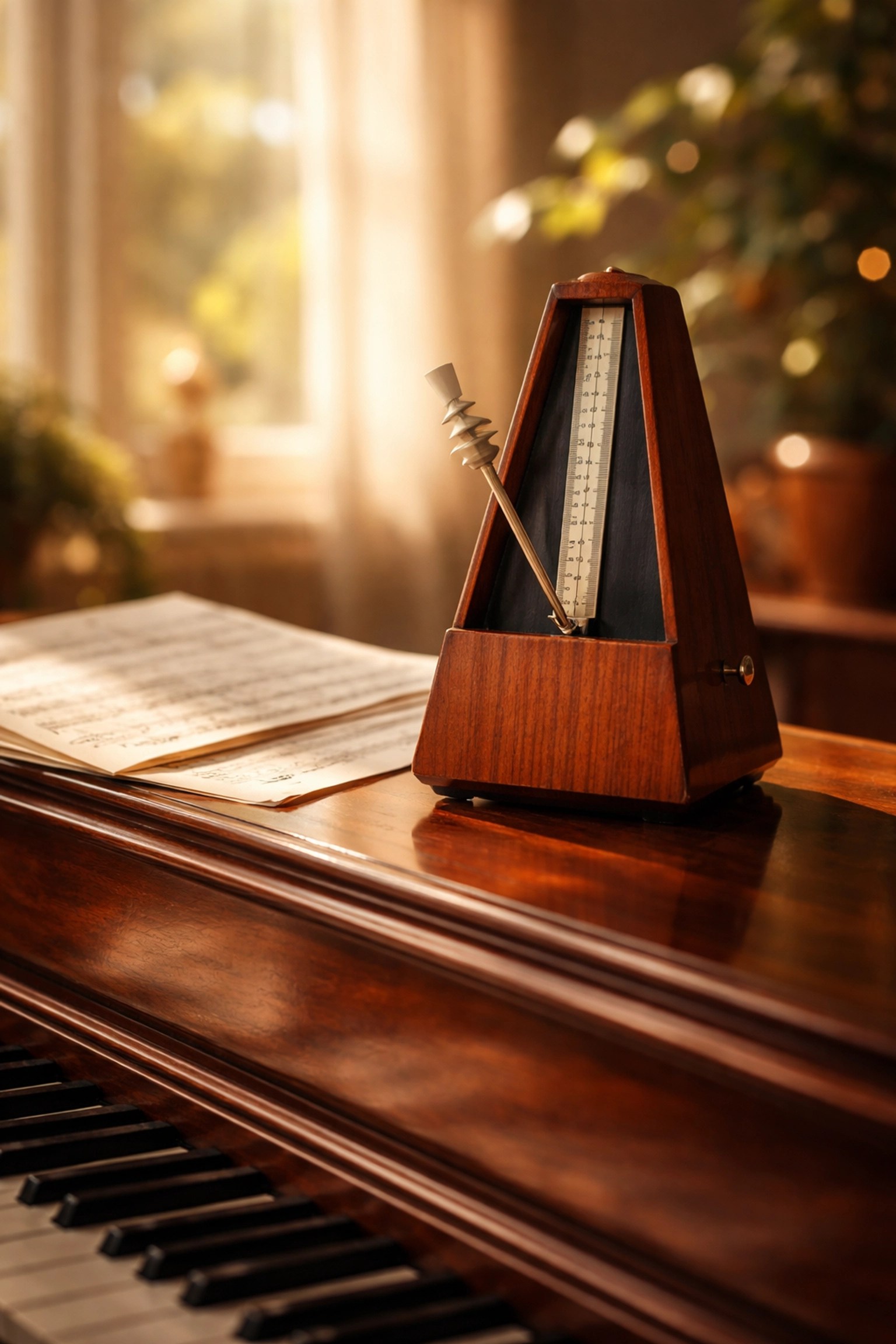
    The fix: Start using a metronome regularly, especially when learning new pieces. Begin at a tempo where you can play comfortably without errors (even if it feels painfully slow), then gradually increase the speed. This builds genuine control rather than a shaky approximation of the right tempo.

    Classic wooden metronome on piano lid with sheet music, emphasizing the importance of using a metronome for consistent music practice.


    Mistake #4: Inconsistent Practice Schedules

    Here's something I tell all my students: fifteen minutes every day beats two hours once a week. Every single time.

    Music is a skill built on muscle memory and neural pathways, and these develop through regular, repeated exposure. When you practice sporadically, your brain essentially has to "re-learn" things each time you sit down. Progress becomes frustratingly slow, and motivation takes a nosedive.

    The fix: Build practice into your daily routine, even if it's just 15-20 minutes. Same time each day works best: before breakfast, after school, during your lunch break. Make it a habit rather than a decision, and you'll be amazed at how quickly you improve.


    Mistake #5: Skipping the Fundamentals

    I get it. Scales are boring. Arpeggios feel pointless. You just want to play actual music.

    But here's what those "boring" exercises are really doing: they're building the technical foundation that makes everything else possible. Scales teach your fingers the geography of the keyboard. Arpeggios develop coordination. Basic theory helps you understand why the music works, not just what notes to play.

    Skipping fundamentals is like trying to build a house without laying foundations. It might look okay for a while, but eventually, cracks appear.

    The fix: Dedicate even just 5 minutes of each practice session to technical work. Scales, arpeggios, Hanon exercises: whatever suits your level. It's not glamorous, but it pays dividends in everything else you play.


    Mistake #6: Poor Posture and Technique

    This one creeps up on you. You start a practice session sitting properly, and twenty minutes later you're hunched over the keys like a question mark, wrists at strange angles, tension building in your shoulders.

    Poor posture doesn't just affect your comfort: it affects your playing. Tension in your arms restricts movement. Bad hand positioning creates strain. Over time, you risk developing repetitive strain injuries that can sideline you for weeks or months.

    The fix: Check in with your body regularly during practice. Shoulders relaxed? Wrists loose? Feet flat on the floor? Consider practising in front of a mirror occasionally, or better yet, have a teacher observe and correct your posture. At AberMusic, this is something we focus on from day one: building good habits early prevents problems later.


    Mistake #7: Practising Without a Plan

    "I'll just play through some stuff" is not a practice plan. It's a recipe for aimless noodling.

    Without clear goals for each session, it's easy to spend all your time on pieces you already know (because they feel good) while avoiding the tricky bits that actually need work. You stay in your comfort zone, and progress stalls.

    The fix: Before you start, decide what you want to accomplish. Maybe it's mastering the left hand in bars 8-16. Maybe it's getting a scale up to a certain tempo. Maybe it's sight-reading something new. Write it down if it helps. Having a focus transforms practice from "going through the motions" to genuine, measurable improvement.


    How AberMusic Helps You Practice Smarter

    At AberMusic, we know that what happens between lessons matters just as much as the lessons themselves. That's why we've developed tools and methods to help our students make the most of their practice time.

    Our AberMusic Practice App is designed to give students structure and accountability. It helps you break down your practice sessions, set goals, track your progress, and stay consistent: even on days when motivation is low. No more aimless noodling or forgotten assignments.

    Combined with our teaching methods (which emphasise understanding why you're doing something, not just what), students find they progress faster and enjoy practice more. Because let's face it: practice should feel rewarding, not like a chore.


    The Bottom Line

    Making mistakes is part of learning. The goal isn't perfection: it's awareness. Once you recognise the habits that hold you back, you can start replacing them with habits that propel you forward.

    So next time you sit down to practice, remember:

    • Slow down and fix errors immediately
    • Take breaks to keep your brain fresh
    • Use a metronome to build solid rhythm
    • Be consistent with daily practice
    • Don't skip the fundamentals
    • Watch your posture and technique
    • Have a plan for each session

    Small changes, big results. You've got this. 🎹

  • Looking for Online Piano Lessons? Here Are 10 Things You Should Know First

    Looking for Online Piano Lessons? Here Are 10 Things You Should Know First

    There's a quiet revolution happening in music education. The idea that meaningful piano lessons require sharing the same physical space as your teacher? It's a notion that's slowly, gracefully, becoming obsolete.

    Online piano lessons have matured. What was once a compromise has become, for many students, the preferred way to learn. But not all online music lessons are created equal: and before you book your first session, there are a few things worth knowing.

    Consider this your field guide.


    1. Geography No Longer Limits Your Options

    Perhaps the most liberating aspect of online piano lessons is this: your teacher no longer needs to live in your town. Or your country, for that matter.

    This matters more than you might think. Finding a conservatoire-trained instructor who specialises in your particular interests: whether that's late Romantic repertoire, jazz improvisation, or preparing for grade exams: used to require luck and proximity. Now it simply requires an internet connection.

    At AberMusic, our instructors hold credentials from some of the UK's finest conservatoires. That level of training is available to you whether you're in Aberystwyth, London, or somewhere else entirely.


    2. You'll Need Decent Technology (But Nothing Extraordinary)

    Let's address the practical side. Online lessons do require a few things: a reliable internet connection, a device with a camera and microphone, and ideally a setup that allows your teacher to see your hands clearly.

    You don't need professional-grade equipment. A laptop or tablet positioned thoughtfully will do the job. Some students use a second device or an adjustable stand to improve camera angles: but these are refinements, not requirements.

    The technology should fade into the background. When it works well, you forget it's there.


    3. Sound Quality Has Its Limits: And That's Okay

    Here's an honest truth: video calls compress audio. Subtle nuances in tone: the delicate decay of a note, the precise weight of a chord: can sometimes be harder to perceive through a screen.

    But with a high-level teacher, nuance is never a hindrance. It simply changes how you work. Instead of relying on “can you hear that?” moments, great online teaching becomes more descriptive and more precise: where the sound sits, how the arm weight transfers, what kind of touch produces the colour you want, and why it matters musically.

    In practice, this often leads to a deeper understanding for the student. You learn to name what you’re doing, repeat it deliberately, and recreate it reliably. It’s different from being in the same room: but the quality of the result is absolutely not “less”.


    4. Playing Together Online: Unison Is Tricky, Accompaniment Is Absolutely Possible

    Internet latency means traditional unison duets (both of you trying to play the same beat at the same time) can be tricky on a normal video call.

    But that doesn’t mean “playing together” disappears. Live accompaniment is absolutely possible: and it’s a regular part of AberMusic’s online lessons. The setup simply changes: the teacher can accompany the student (or vice versa) in a way that stays musical and useful, without chasing perfect millisecond alignment.

    This is especially true in voice lessons. Steven (our founder) frequently provides live piano accompaniment in online voice lessons with great success: helping singers work on timing, phrasing, confidence, and performance craft in a way that feels genuinely collaborative.

    And for a high-authority reality check: AberMusic students have been accepted into top conservatoires and prestigious musical theatre schools through 100% online instruction. The quality of the result is identical to in-person learning: because what matters most is the teaching, the structure, and the work you do between lessons.

    AberMusic Piano Lesson with Digital Annotation


    5. Recording Your Lessons Becomes Effortless

    One of the quieter advantages of music lessons online: recording is built in.

    Platforms like Zoom allow you to capture your entire lesson with a single click. This means you can revisit your teacher's demonstrations, re-hear their feedback on tricky passages, and hold yourself accountable during practice sessions. No more relying on hastily scribbled notes or half-remembered instructions.

    For students serious about progress, this alone can justify the format.


    6. The Right Teacher Matters More Than the Medium

    This deserves emphasis. A brilliant teacher delivering lessons online will serve you far better than a mediocre teacher sitting beside you.

    The quality of instruction: the depth of musical understanding, the ability to diagnose problems, the skill in communicating solutions: these are what determine your progress. The delivery method is secondary.

    Yes: many AberMusic teachers are conservatoire-trained, and we value that background because it tends to correlate with high musical standards and professional-level training.

    But the non-negotiable for us isn’t the label: it’s the standard. If we recommend a teacher who doesn’t have a formal conservatoire degree, they’ve been carefully selected for exceptional ability and genuinely conservatoire-standard teaching. We only work with teachers who share AberMusic’s approach to quality and professionalism, and we provide optional resources, CPD and peer support (including optional guidance from our founder, Steven) to help everyone deliver a brilliant, consistent learning experience.


    7. Flexibility Is Genuine, Not Just Marketing

    The convenience of online piano lessons is real and substantial.

    No travel time. No battling traffic or public transport. No rearranging your entire evening around a fixed lesson slot in a specific location. You can take your lesson from home, from a holiday rental, from a quiet room at work during your lunch break.

    This flexibility makes consistency easier. And consistency, in music, is everything.


    8. Structure and Accountability Still Matter

    The freedom of online learning can be a double-edged sword. Without the ritual of physically travelling to a lesson, some students find it easier to become passive: to let practice slide, to approach lessons unprepared.

    This is where a structured approach becomes essential. At AberMusic, our students access a dedicated student portal and practice app designed to maintain momentum between lessons. Progress tracking, practice logs, curated resources: these tools transform online lessons from isolated events into an ongoing educational journey.

    The technology supports you. But you still have to show up, mentally and musically.


    9. Live Feedback Cannot Be Replicated by Apps

    A note on the alternatives: there are many piano-learning apps available now, some of them quite sophisticated. They have their place: particularly for absolute beginners exploring whether piano is right for them.

    But apps cannot watch you play and notice that your wrist is too tense. They cannot hear your interpretation and suggest a different way of thinking about a phrase. They cannot answer the question you didn't know you needed to ask.

    Live online lessons with a qualified teacher offer something fundamentally different: responsive, personalised instruction. Real-time correction prevents bad habits from taking root. This is the difference between learning efficiently and simply going through the motions.


    10. The Best Online Experience Feels Personal

    Finally, and perhaps most importantly: good online piano lessons don't feel like a transaction. They feel like a relationship.

    The teachers who excel in this format are those who create genuine connection despite the screen. They remember what you struggled with last week. They celebrate your progress. They understand your goals and shape their teaching accordingly.

    When you find that kind of teacher: someone who combines conservatoire-level expertise with warmth and adaptability: the online format becomes invisible. What remains is simply excellent teaching.


    11. A Bespoke Connection

    When you sign up through AberMusic, you have the freedom to choose a teacher who inspires you from our handpicked network, or we can personally match you with the perfect fit for your goals. While we handle the booking and billing admin on their behalf, your lessons are delivered directly by your chosen independent teacher: ensuring a premium, bespoke experience from your very first session.


    A Final Thought

    Online piano lessons aren't for everyone. Some students genuinely prefer the energy of a shared physical space, and that's entirely valid.

    But if you've been hesitant about trying online lessons: uncertain whether they could offer the depth and quality you're looking for: consider this your permission to explore.

    The barriers that once made online learning feel like a compromise have largely dissolved. What remains is an opportunity: access to exceptional teaching, on your schedule, from wherever you are.

    If that sounds appealing, we'd love to hear from you. Visit AberMusic to learn more about our approach to music lessons online, or explore our journal for more insights into learning music well.

    The Right Teacher Matters More Than the Medium.

  • How to Choose the Best Sheet Music: A Beginner's Guide to Quality Resources

    How to Choose the Best Sheet Music: A Beginner's Guide to Quality Resources

    Picture this: you've just started learning piano (or maybe your child has), and you're buzzing with excitement. You hop online, download some free sheet music, print it out… and suddenly you're squinting at tiny notes, confusing fingerings, and an arrangement that sounds nothing like the song you love.

    We've all been there. And honestly? Bad sheet music can kill your motivation faster than a broken string.

    The truth is, not all sheet music is created equal. Whether you're a complete beginner, a returning adult learner, or a parent helping your child navigate their musical journey, knowing how to spot quality sheet music makes a massive difference. It's the difference between frustration and flow, between giving up and falling in love with music.

    So let's break it down. Here's your friendly guide to choosing sheet music that actually helps you learn.

    Why Quality Sheet Music Actually Matters

    You might be thinking, "It's just notes on a page, how different can it really be?"

    Surprisingly different, actually.

    Good sheet music does the heavy lifting for you. It presents the music clearly, with accurate notation, sensible page turns, and helpful details like fingerings and dynamics. Poor quality sheet music? It leaves you guessing, squinting, and potentially learning mistakes that you'll have to unlearn later.

    Think of it like a recipe. A well-written recipe tells you exactly what to do, step by step. A badly written one leaves out crucial details, uses confusing measurements, and has you Googling "what does 'cook until done' even mean?" halfway through.

    Quality sheet music sets you up for success from the start.

    AberMusic Studio Bookshelf

    Know Your Level (And Be Honest About It)

    Before you even start browsing, take a moment to honestly assess where you're at. This isn't about ego, it's about finding music that challenges you just enough without tipping into frustration territory.

    A piece that's too easy? You'll get bored. Too hard? You'll get discouraged. The sweet spot is music that stretches you slightly beyond your comfort zone while still being achievable.

    Here are three areas to consider:

    Reading Ability

    Can you read the key signature comfortably? If a piece is written in a key you've never played in, that's an extra hurdle. It's not impossible, but factor it in. If you've been playing in C major and G major, jumping straight to something with five flats might be a bit ambitious.

    Rhythmic Complexity

    Check the time signature and scan through for tricky rhythms. Dotted rhythms, triplets, and syncopation can catch beginners off guard, especially if you're encountering them for the first time. There's nothing wrong with these rhythms, but it helps to know what you're getting into.

    Technical Demands

    Does the piece introduce new techniques like arpeggios, chord stretches, or quick hand position changes? Again, these are great for growth, but make sure you're not stacking too many new challenges at once.

    A good rule of thumb: aim for pieces where about 80% feels manageable and 20% pushes you to grow.

    What to Look For: The Quality Checklist

    Right, so you've found a piece you want to play. How do you know if the sheet music itself is any good? Here's what to look for:

    Clear Engraving

    This is the fancy term for how the music is printed or displayed on the page. Good engraving means:

    • Notes are evenly spaced and easy to read
    • Staff lines are clear and not too crowded
    • Accidentals, dynamics, and other markings are placed logically
    • Page turns happen at sensible moments (not mid-phrase!)

    If you're squinting or feeling visually overwhelmed, that's a red flag.

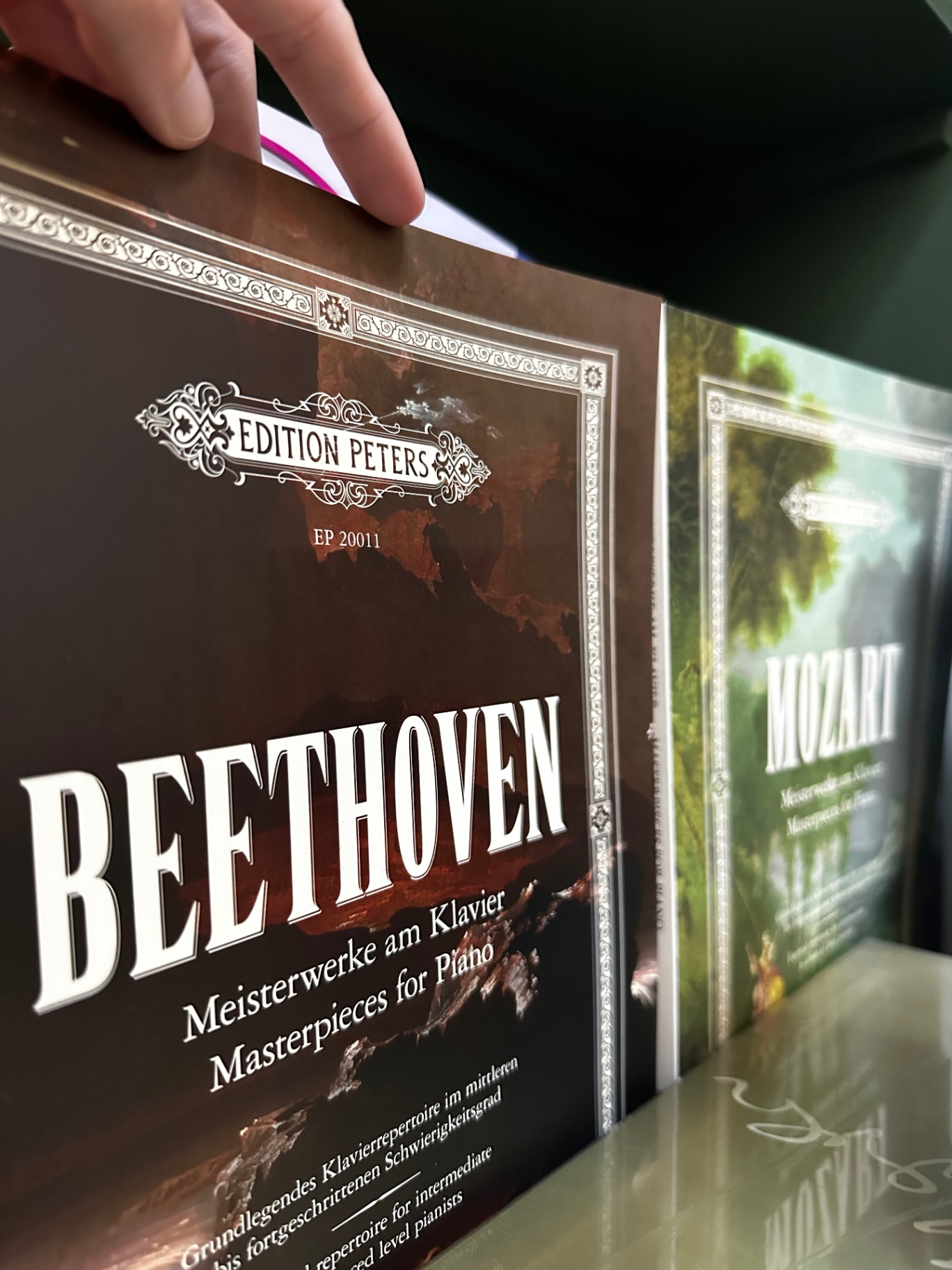
    Edition Peters Sheet Music Books for Piano

    Accurate Arrangements

    This is huge, especially for popular music. Anyone can create an "arrangement" of a song, but not all arrangements are accurate or well-crafted. Some simplify things in ways that lose the essence of the music. Others include errors that made it through without proper editing.

    Look for arrangements from reputable publishers or sources. Names like Edition Peters, Hal Leonard, Alfred, and Henle have built their reputations on accuracy and quality. When in doubt, stick with the trusted names.

    Appropriate Difficulty Grading

    Many publishers grade their music by difficulty level (Grade 1, Grade 2, etc.). This is incredibly helpful, but be aware that grading isn't universal. One publisher's "Grade 3" might be another's "Grade 4."

    If you're working with a teacher, they can help you navigate this. If you're learning independently, try to preview the music before buying (many online stores let you see the first page) and compare it to pieces you've already played.

    Helpful Extras

    The best sheet music includes thoughtful extras like:

    • Fingering suggestions
    • Pedal markings (for piano)
    • Dynamic markings and phrasing
    • Brief performance notes or historical context

    These details make a real difference, especially when you're learning independently.

    A Quick Note on Urtext Editions (And Why They’re Worth It)

    If you’re buying classical sheet music, you’ll often see the word “Urtext” (German for “original text”). In short, an Urtext edition aims to present the music as close as possible to the composer’s original intentions, based on reliable source material (manuscripts, first editions, and other historical documents).

    Why that matters: some editions include heavy editorial “help” (extra dynamics, phrasing, or even altered notes) that might not actually be what the composer wrote. That doesn’t automatically make them bad, but if you want the most authentic starting point, Urtext is the gold standard.

    Two publishers that are especially respected for Urtext quality are G. Henle Verlag (Henle) and Bärenreiter. Their scores are known for meticulous research, clear engraving, and professional presentation, the kind of editions you’ll see used in conservatoires.

    This ties in closely with what we do at AberMusic. We’re big on teaching from materials you can trust, and in the AberMusic shop, Steven Swindells prioritises these standard-setting editions wherever they’re appropriate, so our students are learning from the best sources right from the start.

    Where to Find Quality Sheet Music (The Simple Answer)

    If you want to avoid wasting time and money on questionable editions, the easiest route is to use a source that’s already been quality-checked.

    That’s exactly why the AberMusic shop exists: a focused selection of excellent resources, available online and in-person at the AberMusic Studio (Ceredigion).

    Everything we stock is chosen with learning in mind, and it’s hand-picked by our founder, Steven Swindells, so you can feel confident you’re getting editions with clear engraving, reliable editing, and sensible progression for students.

    Glass coffee table in AberMusic studio waiting area

    A Word on Digital vs. Print

    This one comes down to personal preference. Digital sheet music is convenient, you can store hundreds of pieces on a tablet, adjust the size, and even have the page turn automatically with some apps.

    But many musicians (myself included) still prefer print. There's something about a physical book that just feels right for practice. No screen glare, no battery to worry about, and you can scribble notes all over it.

    The good news? You don't have to choose. Many publishers offer both options, sometimes bundled together.

    What We Do at AberMusic

    At AberMusic, quality is something we genuinely care about. Our studio is stocked with carefully curated sheet music resources, from classical masterworks to contemporary pieces, all chosen with our students' learning in mind.

    We believe that having the right materials makes learning more enjoyable and more effective. That's why we invest in professional editions and keep our library organised by difficulty level, composer, and genre.

    Whether you're taking piano lessons or voice lessons with us, you'll have access to quality resources that support your musical journey.

    The AberMusic Shop (For Everyone)

    Whether you’re an AberMusic student or you’re learning elsewhere, the AberMusic shop is the place to buy high-quality, carefully curated sheet music you can keep, annotate, and build your own music library with.

    Everything we stock is hand-picked by our founder, Steven Swindells (conservatoire-trained). Steven prioritises editions that are clear to read, reliable, and genuinely helpful for progress, so you’re not wasting money on “almost right” versions.

    Two easy ways to shop:

    • Online: order from wherever you practise
    • In-person at the AberMusic Studio (Ceredigion): browse in person and get friendly guidance on what will suit your level

    Call to action: Want the “right next piece” rather than another book that gathers dust? Shop with AberMusic online, or pop into the studio and we’ll help you choose.

    Studio Resources (Exclusive for AberMusic Students)

    If you’re enrolled at AberMusic, you get more than just the option to buy great editions, you also get extra learning resources built into your lesson experience.

    Alongside your lessons, students receive:

    • Exclusive access to a professional studio library (ideal for trying repertoire, comparing editions, and exploring new composers without having to buy everything upfront)
    • Complimentary access to the student portal for lesson support and materials
    • Complimentary access to our practice app, helping you stay organised and motivated between lessons

    In other words: the shop is for purchasing your own copies to practise with at home, while Studio Resources are the added support AberMusic students get as part of learning with us.

    AberMusic Studio Corner

    The Bottom Line

    Choosing the right sheet music isn't just a minor detail, it's a foundational part of learning music well. Good sheet music teaches you proper technique, accurate rhythms, and musical expression from day one. Bad sheet music… well, it just gets in the way.

    So take your time. Assess your level honestly. Look for clear engraving, accurate arrangements, and appropriate difficulty. And don't be afraid to invest a few pounds in quality editions: your future self will thank you.

    Happy practising! And if you ever want personalised recommendations or guidance, you know where to find us. Pop into the studio or get in touch( we're always happy to chat about music.)

  • The 5-Minute Miracle: Why Small Practice Bursts Are the Secret to Musical Success

    The 5-Minute Miracle: Why Small Practice Bursts Are the Secret to Musical Success

    [HERO] The 5-Minute Miracle: Why Small Practice Bursts Are the Secret to Musical Success

    Let’s be honest. You’re busy.

    Between work, family, the weekly shop, and that ever-growing to-do list, finding an hour to sit down with your instrument feels about as realistic as winning the lottery. And when you can’t find that “proper” chunk of time, it’s tempting to think: what’s the point in practising at all?

    Here’s the thing though : that belief is holding you back more than your schedule ever could.

    If you’re a beginner adult (or a student just getting started), this is the secret most people miss: you don’t need a huge chunk of time to make real progress. What you need is a habit.

    What if I told you that just five minutes of focused practise could genuinely transform your musical progress? Not as a consolation prize, but as an actual, science-backed starting point that works brilliantly for busy beginners.

    Sounds too good to be true? Stick with me.

    The Myth of the Marathon Practice Session

    We’ve all been conditioned to believe that “real” practise means sitting down for 45 minutes, an hour, maybe longer. Anything less feels like cheating, right?

    And yes — once you reach more advanced levels, longer sessions do become important. You need time for stamina, detail, and deeper musical work.

    But for beginner adults and students, that expectation can backfire. It creates pressure, guilt, and an all-or-nothing mindset that stops you starting at all.

    The truth is, when you’re building the foundations, consistency beats duration every single time. Your brain doesn’t care whether you practised for five minutes or fifty : what matters is that you showed up, focused on something specific, and gave your neural pathways something to work with.

    Why Five Minutes Actually Works (The Science Bit)

    There’s a fascinating technique called the “5-Minute Miracle” that’s been gaining traction among musicians and educators. The concept is beautifully simple: instead of trying to tackle an entire piece or technique in one session, you focus intensely on a single, specific problem for just five minutes.

    That’s it. Five minutes of laser-focused attention on one thing.

    For beginner adults and students, it’s the perfect starting point because it removes the pressure. You’re not trying to “be a proper musician” in one sitting — you’re just showing up, daily, in a way that’s actually doable.

    Here’s why it’s so effective:

    Your Brain Does the Heavy Lifting Overnight

    When you present your brain with a focused musical problem and then step away, something magical happens. Your subconscious keeps working on it : during your commute, while you’re cooking dinner, and especially while you sleep.

    This is called consolidation, and it’s the reason so many musicians report coming back the next day to find that tricky passage suddenly feels easier. Your brain has been quietly practising without you even realising it.

    You Maintain Peak Mental Focus

    Think about the last time you sat down for a long practise session. How sharp were you by the end? Probably not as sharp as when you started.

    Five-minute sessions keep you at peak mental acuity. There’s no time to warm up with stuff you’ve already mastered or to zone out. You’re forced to address the actual problem immediately, which makes every second count.

    It Removes the Mental Barrier

    Here’s a psychological truth: committing to five minutes feels easy. Committing to an hour feels like a mountain to climb, especially after a long day.

    When the barrier to entry is low, you’re far more likely to actually do it. And once you pick up your instrument, you’ll often find yourself playing longer anyway : but crucially, there’s no pressure to.

    Male adult student practising piano at home in a high-end modern living room, side profile with face and hands on the keys, with no music stand or sheet music visible.

    How to Make Your Five Minutes Count

    Not all practise is created equal. If you’re only going to spend five minutes, you need to make them count. Here’s how:

    1. Pick One Specific Thing

    This is crucial. Don’t try to “run through” a piece or work on multiple techniques. Choose one problem:

    • A chord change that trips you up
    • A single bar with awkward fingering
    • That rhythm pattern you can never quite nail
    • The transition between two sections

    One thing. That’s your focus for today.

    2. Slow It Right Down

    Speed is the enemy of accuracy when you’re learning. Take whatever you’re working on and slow it down until you can play it perfectly. Then, and only then, gradually increase the tempo.

    Five minutes of slow, accurate practise beats twenty minutes of sloppy fast playing.

    3. Use the “Add One” Method

    This is brilliant for building up complex passages:

    • Day 1: Practise the first bar or phrase for five minutes
    • Day 2: Spend 30 seconds reviewing day one, then add the next bar
    • Day 3: Quick review of both, then add the third bar

    By the end of the week, you’ve built up an entire section without ever feeling overwhelmed.

    4. Actually Stop at Five Minutes

    This might sound counterintuitive, but if you’re using this method strategically, stopping at five minutes is part of the point. You’re giving your brain a focused problem to chew on, then stepping away to let consolidation do its work.

    Of course, if you’re in the flow and want to keep going, that’s fine too. But don’t feel guilty for stopping.

    Finding Five Minutes in Your Day

    Still thinking you can’t find even five minutes? Let’s get creative:

    • While the kettle boils : perfect for a quick scales run or chord practise
    • Before breakfast : set your alarm five minutes earlier (it’s only five minutes!)
    • During your lunch break : keep your instrument accessible if you work from home
    • While dinner’s in the oven : that fifteen-minute timer is generous
    • Before bed : a few minutes of gentle playing can actually help you wind down

    The key is making it easy. Keep your instrument out of its case if possible. Remove any friction between you and those five minutes.

    And here’s the best bit for beginners: once you start noticing progress (and actually enjoying the process), wanting to stay for 10… 15… 20 minutes often happens naturally. Five minutes is the doorway — not the destination.

    The Compound Effect: Where the Magic Really Happens

    Let’s do some quick maths.

    Five minutes a day, seven days a week = 35 minutes of focused practise per week.

    Over a month, that’s nearly two and a half hours.

    Over a year? More than 30 hours of quality, focused practise time.

    And because you’re practising daily rather than cramming it all into one weekly session, your retention is significantly better. Those neural pathways are being reinforced every single day.

    Compare that to the adult who waits for the “perfect” hour-long session that never comes, practises once a fortnight when they finally find time, and wonders why they’re not improving.

    Consistency wins. Every time.

    A Note for the Perfectionist in You

    If you’re reading this and thinking “but five minutes isn’t proper practise” : I get it. As adults, we tend to have an all-or-nothing mindset. If we can’t do something properly, we’d rather not do it at all.

    But music isn’t about perfection. It’s about progress. It’s about the joy of playing, the satisfaction of nailing something that felt impossible last week, the simple pleasure of making sound.

    Five minutes of that joy is worth infinitely more than zero minutes spent waiting for ideal conditions that never arrive.

    Start Today

    Here’s my challenge to you: today, pick up your instrument for just five minutes. Choose one small thing to work on. Set a timer if it helps.

    Then tomorrow, do it again.

    That’s it. No pressure, no guilt, no marathon sessions required.

    You might be surprised where those five-minute miracles take you.

    Now go pick up that instrument. Your five minutes start now.

  • Online Piano Lessons vs In-Person: Which Is Better For Your Learning Style?

    Online Piano Lessons vs In-Person: Which Is Better For Your Learning Style?

    [HERO] Online Piano Lessons vs In-Person: Which Is Better For Your Learning Style?

    So you’ve decided to learn piano: brilliant choice! But now comes the tricky part: should you go for online piano lessons or stick with traditional in-person sessions? It’s a question we get asked all the time here at AberMusic, and honestly, there’s no one-size-fits-all answer.

    The good news? Both options can lead you to becoming the pianist you’ve always dreamed of being. Recent research actually shows that online and in-person piano lessons produce comparable learning outcomes for most students. The real question isn’t which method is better: it’s which method is better for you.

    Let’s break it down together.

    The Rise of Online Piano Lessons

    If you’d told piano teachers twenty years ago that students would be learning Chopin through a laptop screen, they might have laughed. But here we are in 2026, and online piano lessons have become a genuinely fantastic option for learners of all ages and abilities.

    The pandemic certainly accelerated things, but the truth is that music lessons online were already gaining traction before that. Why? Because technology caught up with ambition. High-quality video calls, digital sheet music, and clever practice apps have made learning piano remotely not just possible, but genuinely effective.

    At AberMusic, we’ve been offering online piano lessons worldwide since we were founded in 2023, and we’ve watched students from the UK to Singapore make incredible progress: all without stepping foot in Wales!

    The Timeless Appeal of In-Person Lessons

    That said, there’s something special about sitting at a piano with your teacher beside you. In-person lessons offer that immediate, tangible connection that’s hard to replicate through a screen.

    When your teacher can reach over and adjust your hand position, there’s a directness to the learning experience that many students find invaluable.

    For those lucky enough to live in or near Ceredigion, our AberMusic Studio offers exactly this experience. There’s a reason in-person piano lessons have been the gold standard for centuries: they work.

    Which Learning Style Suits Online Lessons?

    Online piano lessons might be your perfect match if you tick a few of these boxes:

    You’re self-motivated. Learning from home means you need a bit of internal drive. There’s no teacher physically present to keep you accountable between lessons, so you’ll need to stay on top of your practice schedule yourself.

    You value flexibility. Got a hectic work schedule? Kids with unpredictable routines? Living somewhere rural without easy access to music teachers? Online lessons let you learn from your living room, your holiday rental, or anywhere with a decent internet connection.

    You’re comfortable with technology. If the idea of setting up a video call makes you break out in a cold sweat, online lessons might feel frustrating. But if you’re reasonably tech-savvy (or willing to learn), you’ll find the setup pretty straightforward.

    You want access to specialist teachers. This is a big one. With online piano lessons, geography stops being a barrier. You could be learning from a conservatoire-trained musician without living anywhere near a conservatoire. Our teachers at AberMusic, for instance, bring professional training and performance experience to students anywhere in the world.

    You learn well independently. Some people thrive when they can revisit concepts at their own pace, watch recordings of their lessons, and work through challenges in their own time. If that sounds like you, online learning could be brilliant.

    Which Learning Style Suits In-Person Lessons?

    On the flip side, in-person piano lessons might be the better choice if these points resonate:

    You’re a beginner who needs hands-on guidance. When you’re just starting out, having a teacher who can physically demonstrate proper technique: hand position, posture, pedal use: can make a huge difference. Small adjustments that take seconds in person might take several minutes to communicate over video.

    You thrive on direct interaction. Some students simply learn better when there’s another human in the room. The energy of a shared space, the immediate back-and-forth, the subtle cues you pick up from being physically present: these things matter to certain learners.

    You need external accountability. Let’s be honest: if left to your own devices, would you actually practise? For many students, knowing they have to show up somewhere at a set time keeps them on track in a way that logging onto Zoom from their sofa doesn’t.

    You’re a younger learner. For children (we teach students from age 5 at AberMusic), in-person lessons often work better. Younger students typically benefit from the structure and engagement that comes with face-to-face interaction. That said, plenty of kids do brilliantly online too: it really depends on the individual child.

    You want the social aspects. Recitals, group sessions, and simply being part of a local musical community can be hugely motivating. If that appeals to you, in-person lessons at a dedicated studio like ours in Ceredigion offer something online lessons can’t quite replicate.

    The Honest Trade-Offs

    Let’s talk about the elephant in the room: neither option is perfect.

    Online lessons can suffer from technical hiccups. A dodgy internet connection, audio lag, or video quality issues can occasionally disrupt the flow of a lesson (though these are usually manageable with a bit of setup and troubleshooting).

    In-person lessons require travel and fixed scheduling. If you’re commuting to and from lessons, that’s time (and often money) that adds up. They’re also less forgiving when life throws curveballs: bad weather, illness, or last-minute schedule changes can mean cancelled lessons.

    Split scene showing online and in-person piano lessons, comparing learning environments for students

    Why Not Both?

    Here’s a thought that often gets overlooked: you don’t necessarily have to choose just one.

    Some of our AberMusic students do a hybrid approach: mostly online piano lessons for convenience, with occasional in-person sessions at our Ceredigion studio when they want that hands-on experience. It’s the best of both worlds.

    Others start with in-person lessons to build their foundation, then transition to online as they become more confident and independent. There’s no rule saying you have to stick with one format forever.

    What AberMusic Offers

    Whether you choose online or in-person, here’s what you can expect when you learn piano with us:

    • Conservatoire-trained teachers who are working musicians as well as experienced educators
    • Lessons for students aged 5 and up, from complete beginners to advanced players
    • In-person lessons at our studio in Aberystwyth (perfect for locals!)
    • Online piano lessons available worldwide: wherever you are, we can teach you
    • Complimentary access to our student portal and practice app, helping you stay organised and motivated between lessons

    We’re pretty passionate about making music education accessible, whether you’re down the road from us or on the other side of the planet.

    So, Which Should You Choose?

    Ultimately, the “right” choice depends entirely on your circumstances, your personality, and your goals.

    If you value flexibility, have a busy lifestyle, or don’t live near quality music teachers, online piano lessons could transform your learning experience. If you prefer hands-on guidance, thrive on in-person connection, or have a young learner in the family, traditional lessons might suit you better.

    The most important thing? Just start. Whether you’re pressing keys in our Ceredigion studio or connecting with us from your kitchen table in Toronto, what matters is that you’re making music.

    Ready to Begin Your Piano Journey?

    We’d love to help you figure out which option works best for you. At AberMusic, we offer both in-person piano lessons at our studio in Ceredigion and online piano lessons for students anywhere in the world.

    Book your first lesson with AberMusic today and let’s get you playing. Whether you’re five or fifty-five, a complete beginner or looking to level up, our friendly, conservatoire-trained teachers are here to guide you every step of the way.

    Got questions about whether online or in-person suits you best? Just get in touch (we’re always happy to chat!)