
A child’s first music lesson might begin with a simple question: “What does this sound like?” From there, they start to listen closely, remember a pattern, try a new movement and see what happens. Along the way, music can give a developing mind plenty to think about, and a joyful reason to keep learning.
A Northeastern University study, reported in September 2026, adds to the conversation about music and children’s learning. Researchers compared 76 children aged 7 to 9, half of whom had musical training and half of whom did not. The children with training scored higher on measures of cognitive ability and academic achievement, including working memory, vocabulary and maths.
It is an encouraging finding, but it needs to be understood carefully. The study found a link; it cannot show that lessons alone caused the differences. And its results are not a promise that every child who learns an instrument will become more focused or achieve higher marks. What they do offer is a thoughtful glimpse into how making music may engage skills that support learning.
What does music ask a child’s brain to do?
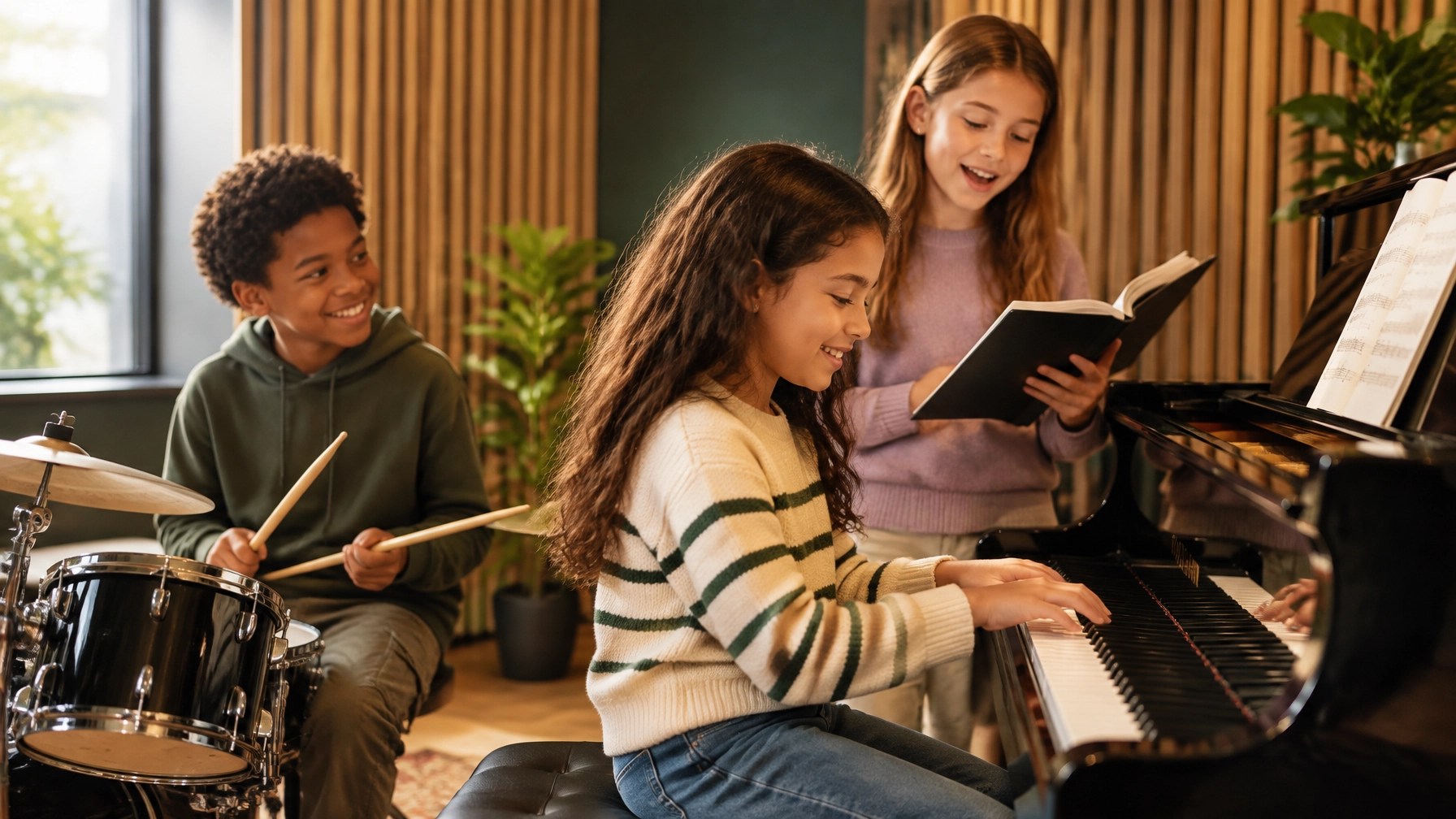
Playing an instrument brings several small challenges together. A young pianist might look at a note, find the right key, listen to the sound and remember what comes next. A singer might follow a melody, listen to a backing track and coordinate their breathing. A drummer might keep a steady beat while changing patterns.
These activities draw on abilities often grouped under executive functions: mental skills that help us focus, hold information in mind, plan actions and shift attention. Northeastern’s coverage of the study describes music-making as an activity that exercises attention, working memory, planning, self-management, listening and adapting.
That gives parents a useful way to think about music lessons. A lesson is not a brain-training worksheet in disguise. It is an opportunity for a child to work towards something they care about, using many different skills along the way.
What did the Northeastern study find?
The study, published in Developmental Cognitive Neuroscience, compared children aged 7–9, with 38 children in each group. The children with musical training practised an instrument for at least 30 minutes per week. Most played piano or a string instrument. Researchers assessed cognitive abilities, working memory and academic skills such as reading, spelling and maths.
On these measures, children with musical training scored higher overall than children without it. The study also examined brain scans from a subset of participants, finding an association between musical training and a difference in a white-matter pathway involved in sound processing and movement.
The findings are interesting, but they are not the last word. The researchers compared children who already had different experiences; they did not randomly assign one group to lessons and another to no lessons. That means the study cannot tell us whether music training caused the differences. Other factors may matter too, including a child’s interests, family circumstances or previous opportunities.
It is also worth being specific about the results: the study assessed cognition, working memory and academic achievement. It did not directly test every everyday skill people might associate with music, such as sustained attention or problem-solving. Those skills can be involved in learning music, but they should not be presented as guaranteed outcomes.
You can read the research paper and Northeastern’s summary of the findings.
Learning is more than a test score
When a child learns music, progress may show up in ways that have nothing to do with a test. They might listen more carefully to a phrase, remember where a piece begins, become more willing to try again after a mistake or feel proud of playing something they once found difficult.
These moments are not proof of a particular cognitive effect, and children develop at different rates. They are part of the wider value of learning: becoming curious, building a skill and discovering that effort can lead somewhere enjoyable.
That is why a child’s own interest matters. One may be excited to play a favourite tune on the piano. Another may want to sing, explore drums or find out how musical ideas fit together through music theory. There is no single instrument or musical path that suits every child.
How parents can support the process
Children do not need pressure to turn their interest in music into something valuable. A supportive home routine can be simple:
- Ask what they enjoyed. It keeps the focus on their experience, not just on getting something right.
- Make practice manageable. A short, regular practice session can feel more inviting than a long session that is hard to fit in.
- Notice small steps. Remembering a rhythm, finishing a short passage or returning to a tricky part are all worth celebrating.
- Leave room for play. Singing along, tapping a beat or experimenting with sounds can help music feel like part of everyday life.
- Let their interests guide choices. A child’s musical tastes may change as they try new things. That is normal.
The aim is not to make every practice session perfect. It is to help a child build a positive relationship with learning and music-making: one that leaves room for patience, enjoyment and their own sense of progress.
Finding a lesson that fits
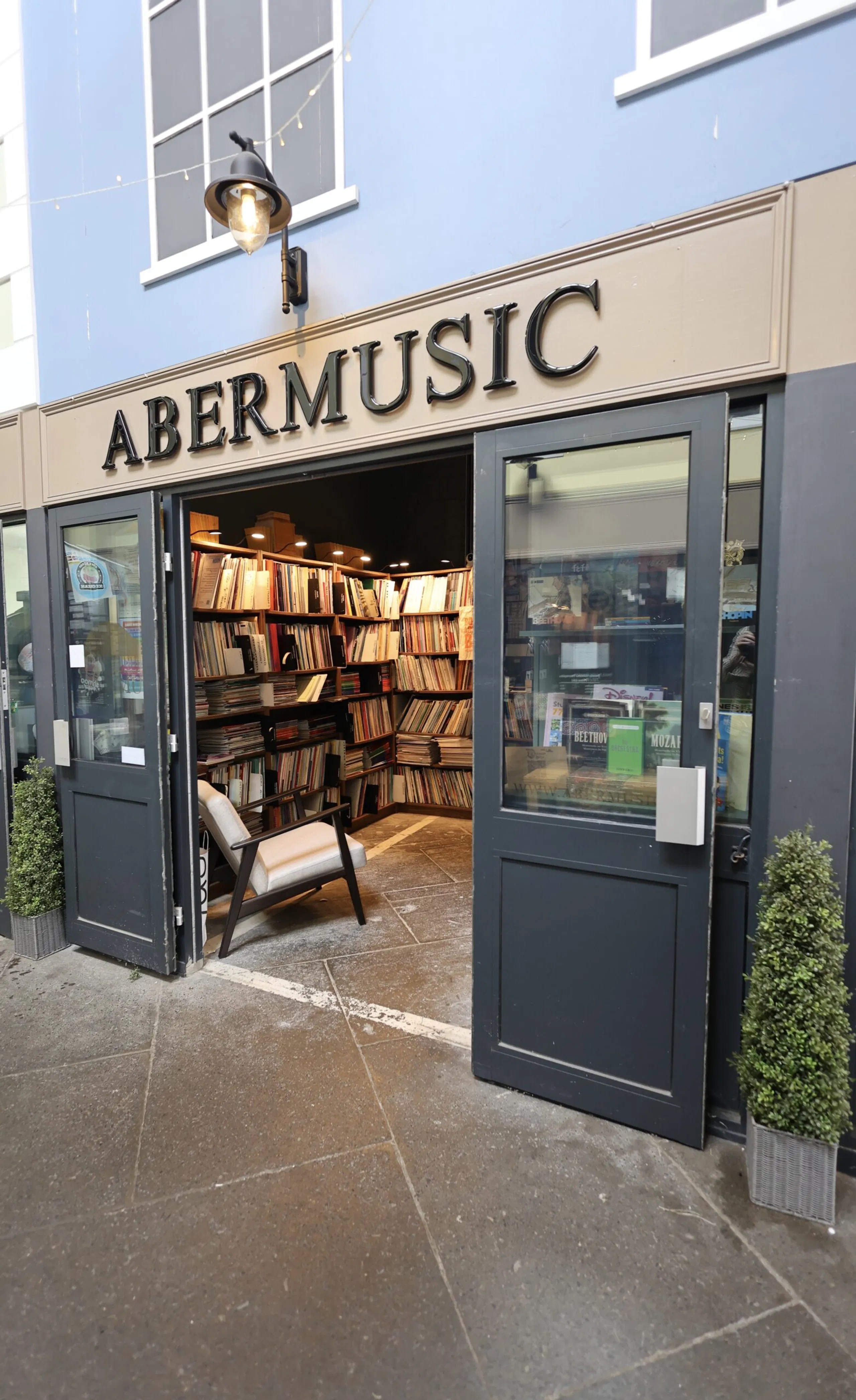
Music lessons are available from age five upwards, with options for piano, voice, drums and music theory. Families near Ceredigion can explore in-person lessons at the Market Hall studio, while online lessons are available worldwide.
AberMusic matches students with independent teachers. Students can be matched with teachers trained at conservatoires and prestigious higher education institutions, and every student receives complimentary access to the student portal and practice app to support learning between lessons.
AberMusic handles lesson booking and billing; lessons are delivered by your chosen teacher.
Most importantly, the right starting point is a child who wants to learn. If your child is curious about music, give that curiosity space to grow. The confidence, concentration and satisfaction they build along the way can be meaningful parts of the journey. Whatever instrument they choose and wherever it takes them.
If your child would like to explore lessons, Book/Enquire with AberMusic.
Leave a Reply